
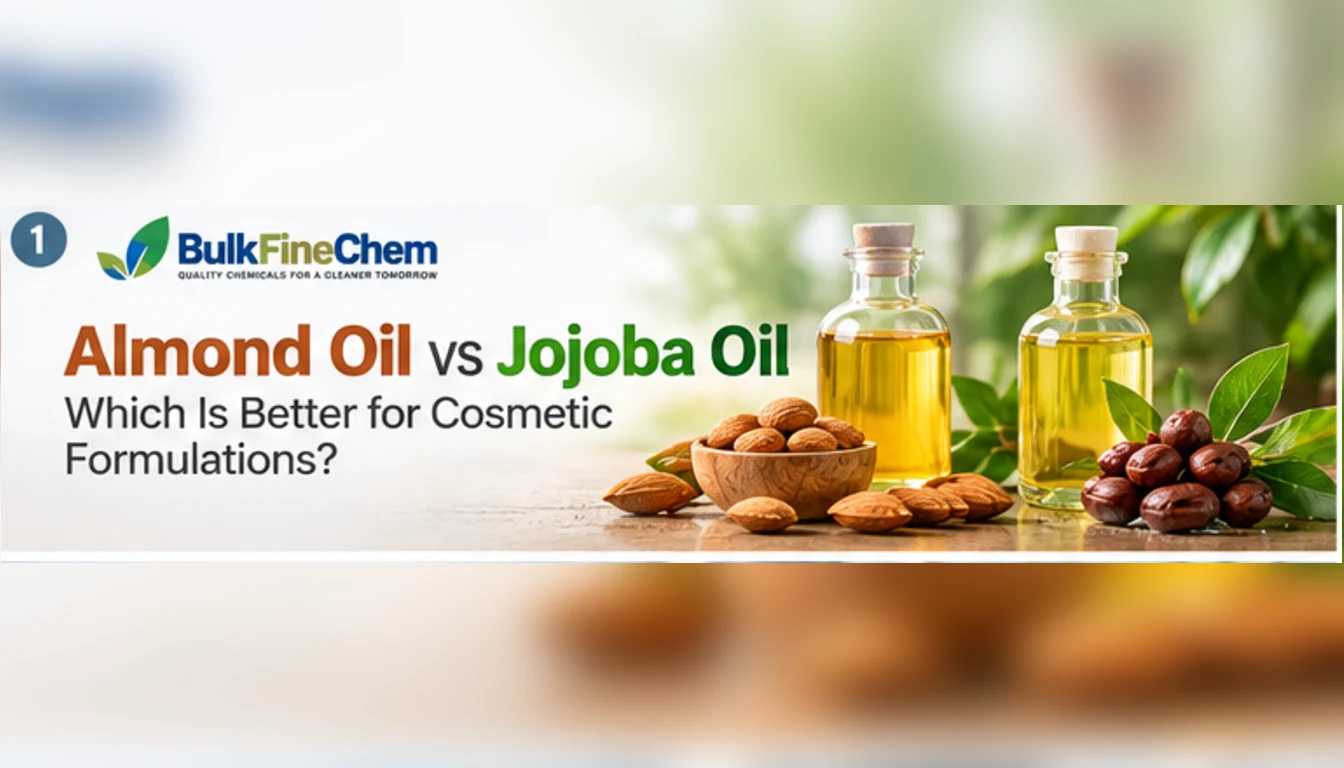
Almond oil vs jojoba oil is a practical formulation decision for skincare, haircare, massage and personal-care manufacturers. Both are popular carrier materials, but they differ in feel, composition, oxidation behaviour and how formulators use them.
Almond Oil vs Jojoba Oil: Quick Comparison
| Factor | Almond Oil | Jojoba Oil |
|---|---|---|
| Material type | Triglyceride vegetable oil | Liquid wax ester |
| Skin feel | Soft, emollient, richer feel | Light, smooth, less greasy feel |
| Typical uses | Massage, creams, hair oils, body oils | Serums, facial oils, scalp products, premium blends |
| Buying focus | Odour, colour, acid/peroxide values, origin | Odour, colour, purity, stability, origin |
What Is Almond Oil?
BulkFineChem lists Almond Oil as a carrier oil for skincare, haircare, massage and essential-oil blends. Its emollient character makes it useful when a formulation needs slip and a nourishing skin feel.
What Is Jojoba Oil?
Jojoba Oil is structurally different from most vegetable oils because it is composed mainly of wax esters. In formulations it is often chosen for a lighter feel and good compatibility with facial, scalp and premium personal-care products.
Which Oil Fits Which Formulation?
Massage and body oils
Almond oil is often attractive when glide, richness and cost control matter. Jojoba can be blended in to modify feel and improve the premium positioning of the formula.
Facial oils and serums
Jojoba is often preferred when formulators want a lighter sensory profile. Final selection should still be validated in the finished formulation.
Hair and scalp products
Both can work. Almond oil is useful in richer conditioning blends, while jojoba is often selected for lighter scalp oils and leave-on products.
What Bulk Buyers Should Check
- Botanical identity and source
- Refined or cold-pressed status
- Colour and odour specification
- Acid and peroxide values where applicable
- Batch COA and storage conditions
- Packaging suited to oxidation-sensitive oils
Frequently Asked Questions
Is jojoba oil actually an oil?
Commercially it is called an oil, but chemically it is largely a liquid wax ester.
Which is lighter on skin?
Jojoba generally gives a lighter, less greasy sensory profile, although the final feel depends on the full formula.
Which is better for massage oils?
Almond oil is widely used for massage because of its slip and emollient feel.
Can almond and jojoba oils be blended?
Yes. Formulators often blend carrier oils to balance cost, glide, absorption and sensory feel.
What documents should bulk buyers request?
Request a batch COA plus TDS/SDS or other supplier documentation relevant to the application.
How should carrier oils be stored?
Follow the supplier specification, generally protecting them from heat, light, air and contamination.
Conclusion
There is no universal winner in almond oil vs jojoba oil. Choose on formulation feel, stability target, cost and product positioning, then confirm performance in the finished formula.
Need a quote? Send BulkFineChem your required oil, quantity, packaging and application.