
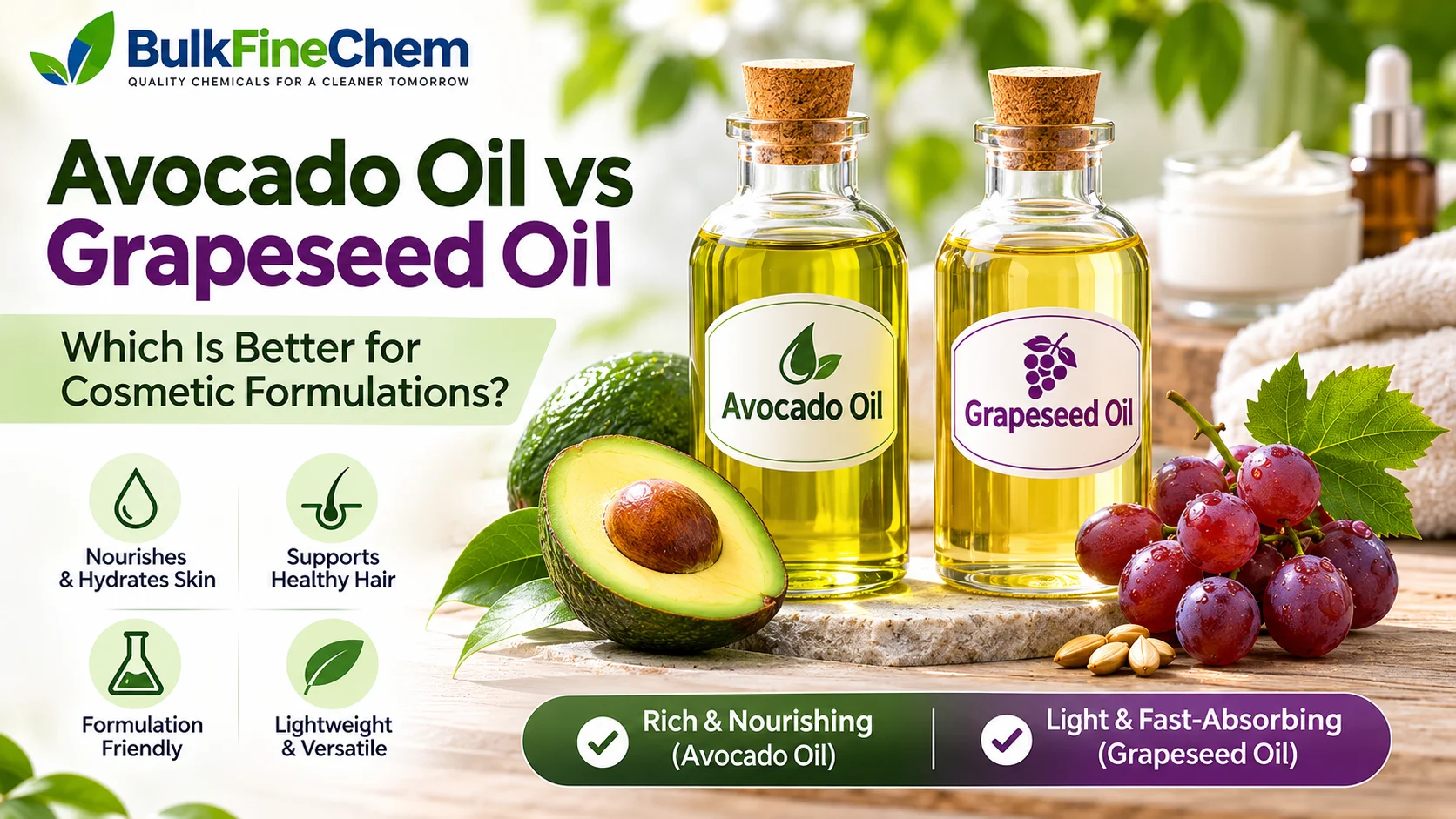
Avocado oil vs grapeseed oil is a useful comparison for cosmetic formulators because both are popular plant-derived carrier oils, yet they behave differently in skincare, haircare, massage and emulsion systems. Avocado oil is generally selected when a richer emollient profile is wanted, while grapeseed oil is often chosen for a lighter feel and faster sensory absorption.
This guide compares the two oils from a bulk-buying and formulation perspective, including skin feel, fatty-acid profile, stability, application fit, COA checks and sourcing considerations.
Avocado Oil vs Grapeseed Oil: Quick Comparison
| Factor | Avocado Oil | Grapeseed Oil |
|---|---|---|
| Typical sensory feel | Richer, more nourishing and emollient | Lighter, smoother and faster-feeling |
| Common cosmetic use | Dry-skin creams, body oils, hair conditioning, massage | Serums, lotions, massage oils, lightweight hair and skin products |
| Formulator focus | Richness, conditioning and emolliency | Light feel, spreadability and fast absorption |
| Stability consideration | Depends on grade, processing and antioxidant profile | Higher unsaturation can require closer oxidation control |
| Buying decision | Compare full specifications, batch COA, sensory profile and finished-formula performance | |
What Is Avocado Oil?
BulkFineChem supplies Avocado Oil as a carrier oil for skincare, haircare, cosmetics, massage and formulation use. It is commonly selected when formulators want a richer oil phase with a nourishing, conditioning character.
Where avocado oil fits well
- Dry-skin creams and lotions
- Body oils and massage blends
- Hair masks and conditioning oils
- Balms and richer leave-on products
- Formulations where a more substantial emollient feel is desirable
What Is Grapeseed Oil?
BulkFineChem also supplies Grapeseed Oil for skincare, haircare, massage and cosmetic formulations. It is typically valued for its lighter sensory profile and ease of blending into products where a less heavy finish is preferred.
Where grapeseed oil fits well
- Light facial oils
- Massage blends
- Fast-absorbing body oils
- Hair serums and scalp oils
- Oil-in-water cosmetic emulsions
Key Difference 1: Skin Feel and Sensory Profile
The sensory difference is often the first thing a formulator notices. Avocado oil generally contributes more richness and cushioning, while grapeseed oil can feel lighter and more fluid.
When richer feel is preferred
Avocado oil may be more suitable in night creams, body butters, dry-skin products, massage oils and rich hair treatments where a more substantial emollient phase is useful.
When lighter feel is preferred
Grapeseed oil can be useful in facial oils, lightweight lotions, serums and products intended to leave less residue after application.
Key Difference 2: Fatty-Acid Profile
Both oils are triglyceride-based vegetable oils, but their fatty-acid balance is different. Grapeseed oil is typically associated with a high proportion of polyunsaturated fatty acids, while avocado oil often contains more monounsaturated fatty acids.
For formulators, that difference can influence skin feel, oxidation behaviour and how the oil performs in a blend.
Key Difference 3: Oxidation and Stability
Natural oils can oxidize during storage and formulation. Oils with higher unsaturation can require closer attention to oxygen exposure, light, heat, headspace and packaging.
What buyers should monitor
- Peroxide value
- Acid value
- Odour and colour changes
- Storage temperature
- Container closure and light protection
- Retest or expiry guidance
Finished-formula stability should always be validated because an oil that is stable in bulk may behave differently once combined with water, emulsifiers, fragrances, botanicals or other ingredients.
Key Difference 4: Use in Emulsions
Both avocado oil and grapeseed oil can be used as part of the oil phase in cosmetic emulsions. The choice depends on the target sensory profile, oil-phase percentage, emulsifier system and finished-product positioning.
Avocado oil in emulsions
Avocado oil can support richer creams and lotions where more body and conditioning are wanted.
Grapeseed oil in emulsions
Grapeseed oil is often attractive in lighter emulsions and products designed for quick spreadability and less greasy after-feel.
Key Difference 5: Haircare Applications
Both oils can be used in haircare, but the product format matters.
- Avocado oil: useful for richer masks, conditioning oils and dry-hair formulations.
- Grapeseed oil: useful for lighter serums, scalp oils and leave-on products where heaviness should be minimized.
Formulators should evaluate combability, shine, residue, wash-off and compatibility with silicones, esters or other oils in the final blend.
Can Avocado and Grapeseed Oils Be Blended Together?
Yes. A blend can be useful when a formulator wants some of avocado oil's richness while keeping the final sensory profile lighter with grapeseed oil.
Blending can also help balance:
- Skin feel
- Spreadability
- Oil-phase viscosity
- Cost
- Marketing positioning
- Finished-product stability
What Bulk Buyers Should Check Before Ordering
- Confirm the exact oil and grade. State whether refined, cold-pressed or another processing grade is required.
- Review the batch COA. Check the parameters relevant to your approved specification.
- Check acid and peroxide values. These can help assess freshness and oxidation status.
- Review colour and odour. Sensory variation can affect the finished product.
- Confirm packaging. Choose packaging appropriate for oxidation-sensitive oils.
- Run formulation trials. Test the oil in the real product before approving a commercial lot.
COA Parameters Worth Reviewing
The exact COA depends on the supplier specification, but cosmetic buyers commonly review:
- Appearance
- Colour
- Odour
- Specific gravity or relative density where specified
- Refractive index where specified
- Acid value
- Peroxide value
- Iodine value where relevant
- Batch number and test date
Which Oil Is Better for Dry Skin Products?
Avocado oil is often the stronger starting point for richer dry-skin products because formulators commonly use it where greater emolliency and conditioning are wanted. However, the final choice should be based on the complete formulation rather than the oil alone.
Which Oil Is Better for Lightweight Products?
Grapeseed oil is often preferred for lightweight facial oils, fast-spreading body oils and lighter lotions. It can help reduce the heavy feel that some richer carrier oils may create.
Frequently Asked Questions
Is avocado oil heavier than grapeseed oil?
In many cosmetic formulations, avocado oil gives a richer sensory profile, while grapeseed oil tends to feel lighter and faster-spreading.
Which oil is better for facial serums?
Grapeseed oil can be a good starting point when a lighter feel is wanted. Avocado oil may be more suitable when a richer emollient profile is part of the product concept.
Which oil is better for hair masks?
Avocado oil is often used in richer conditioning and dry-hair formulations, although both oils can be blended depending on the desired sensory profile.
Can avocado oil and grapeseed oil be mixed?
Yes. Blending can help formulators balance richness, spreadability, cost and stability.
What should cosmetic buyers check on the COA?
Review the batch identity, relevant physical properties, acid value, peroxide value and any other limits required by the approved specification.
Does lighter feel mean better quality?
No. Sensory feel is a formulation characteristic, not a universal quality ranking.
Which oil should I buy in bulk?
Choose the oil that matches the finished-product brief, sensory target, stability requirements and approved raw-material specification.
Conclusion
There is no universal winner in the avocado oil vs grapeseed oil comparison. Avocado oil is often better suited to richer, more conditioning cosmetic systems, while grapeseed oil can be useful when a lighter and faster-feeling oil phase is preferred.
The best bulk-buying decision comes from comparing the full specification, reviewing the batch COA and testing the oil in the actual finished formulation.
Need a bulk quote? Review BulkFineChem's avocado oil and grapeseed oil product pages and send the required quantity, packaging and application to the BulkFineChem team.