
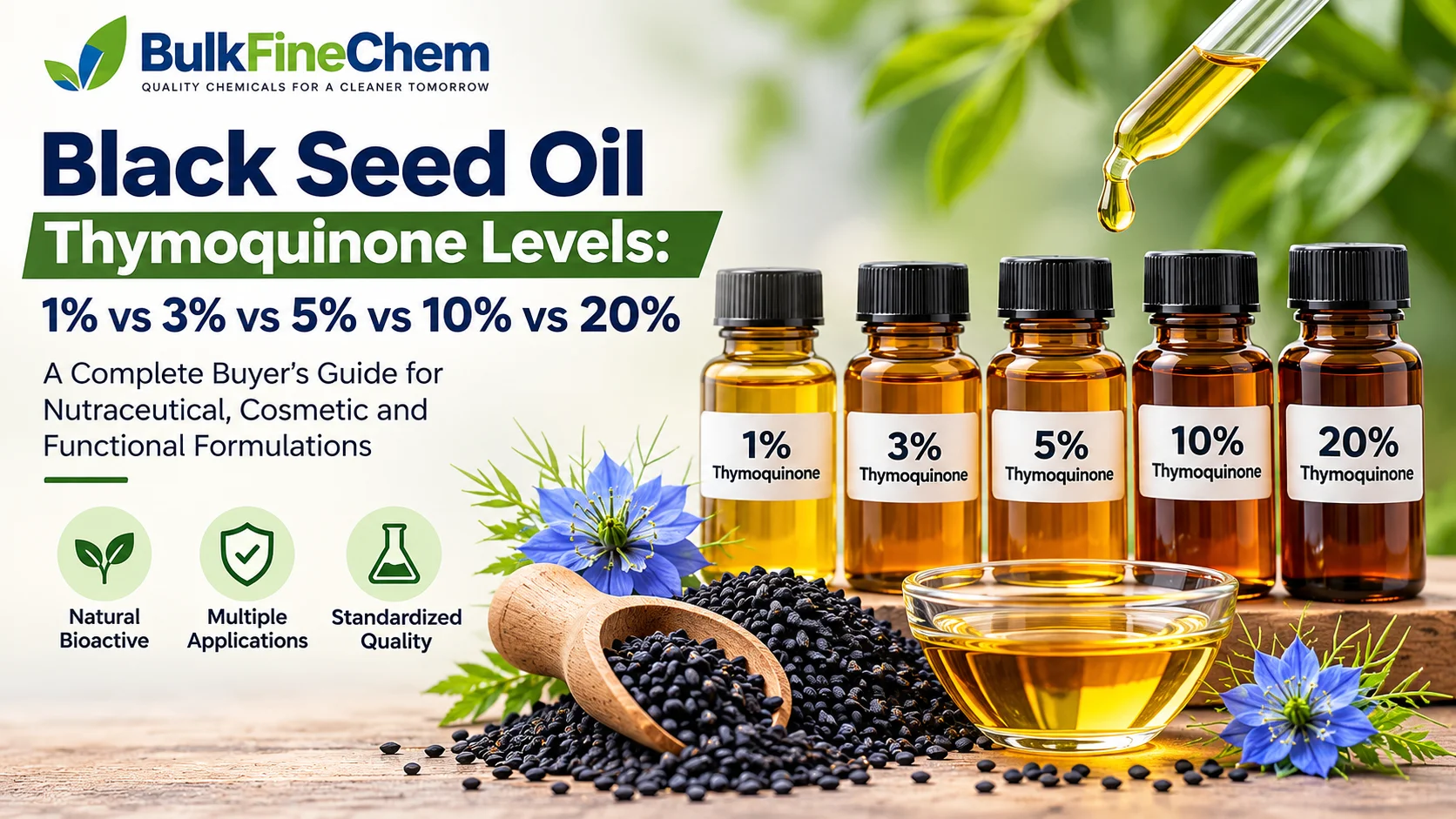
Black seed oil thymoquinone grades can vary widely, and that matters when a buyer needs a standardized raw material rather than a generic black seed oil. BulkFineChem lists multiple standardized strengths—from minimum 1% thymoquinone through 3%, 5%, 10% and 20%—so the right choice depends on the formulation target, specification, dosage design, documentation and cost.
This buyer guide explains how to compare these grades without assuming that the highest percentage is automatically the best option for every product.
What Is Thymoquinone in Black Seed Oil?
Thymoquinone, often abbreviated as TQ, is a naturally occurring marker compound associated with Nigella sativa seed oil. In commercial sourcing, a standardized thymoquinone percentage helps buyers define a minimum concentration that should be confirmed in the supplied batch.
For procurement purposes, the percentage should be treated as a measurable specification. Buyers should verify the claimed minimum through batch documentation and, where required by their quality system, an appropriate analytical method.
Black Seed Oil Thymoquinone Grades: Quick Comparison
| Grade | Standardization | Typical Buyer Focus |
|---|---|---|
| 1% TQ | Minimum 1% thymoquinone | General standardized formulations and lower-concentration raw-material requirements |
| 3% TQ | Minimum 3% thymoquinone | Formulations requiring a stronger standardized marker level |
| 5% TQ | Minimum 5% thymoquinone | Premium standardized formulations with defined TQ content |
| 10% TQ | Minimum 10% thymoquinone | Concentrated specialty formulations where a higher marker level is required |
| 20% TQ | Minimum 20% thymoquinone | High-strength specialty formulations requiring a very concentrated standardized input |
The final choice should come from the finished-product specification and formulation calculations—not from choosing the highest number by default.
BulkFineChem Black Seed Oil 1% Thymoquinone
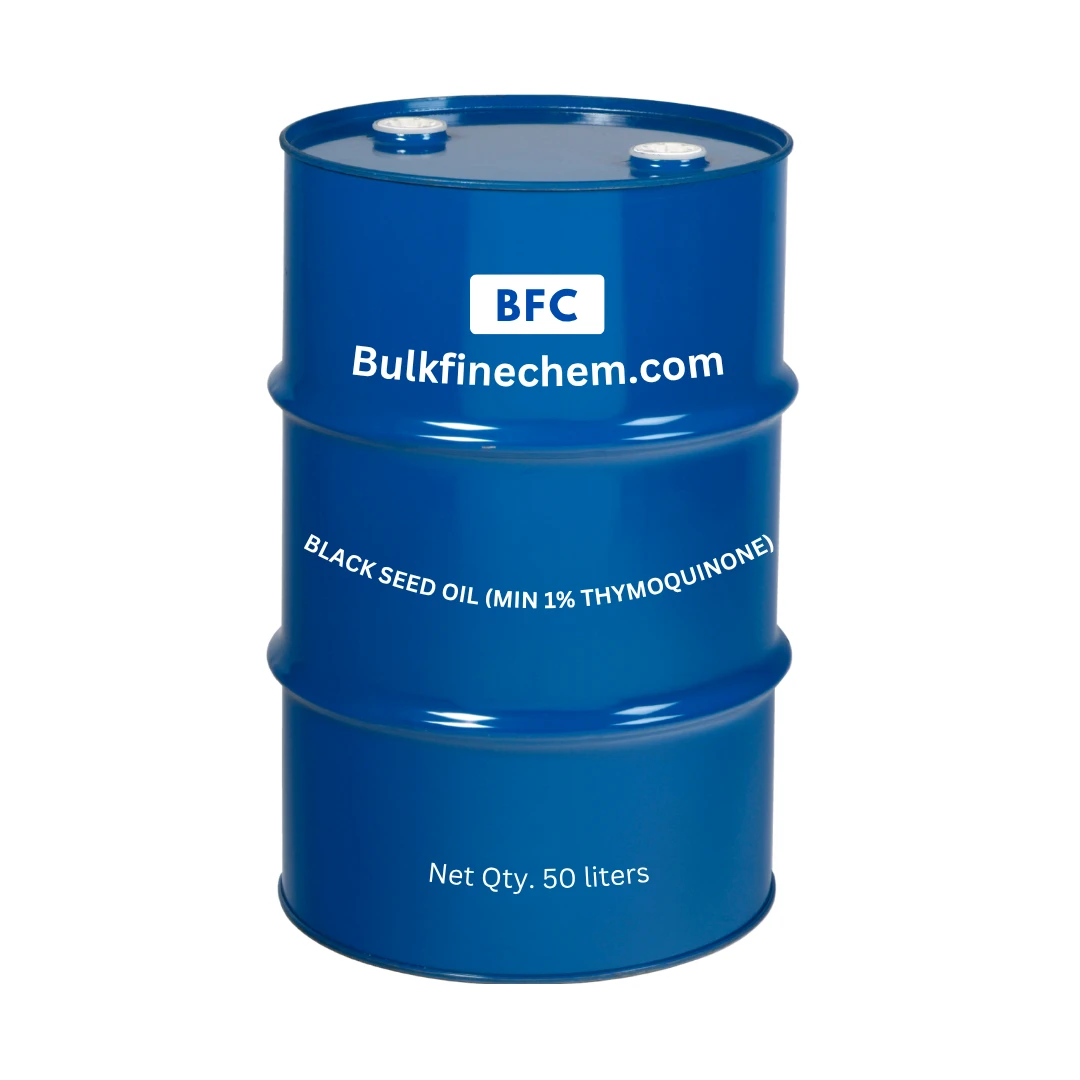
Black Seed Oil (Min. 1% Thymoquinone) is BulkFineChem's entry standardized grade. It can fit buyers who want a defined TQ minimum while keeping the raw material closer to a general black seed oil specification.
When a 1% grade may fit
- Products that require standardized black seed oil but not a highly concentrated input
- Formulations where oil quantity is not tightly constrained
- Buyers who want a defined minimum TQ specification for consistency
- Applications where cost per kilogram matters more than maximum concentration
Black Seed Oil 3% Thymoquinone
Black Seed Oil (Min. 3% Thymoquinone) provides a higher standardized concentration while remaining below the more concentrated 5%, 10% and 20% grades.
This can be useful when formulators need more TQ per unit of oil but do not require an ultra-concentrated raw material.
Black Seed Oil 5% Thymoquinone
Black Seed Oil (Min. 5% Thymoquinone) is positioned as a more concentrated standardized oil for premium nutraceutical, herbal, wellness and personal-care formulations.
Why buyers may specify 5%
A 5% specification can reduce the amount of standardized oil needed to deliver a defined quantity of the marker compared with a 1% or 3% grade. That can matter when formula space, capsule fill weight or oil volume is limited.
Black Seed Oil 10% Thymoquinone
Black Seed Oil (Min. 10% Thymoquinone) is a concentrated grade designed for specialty formulations where the specification requires a substantially higher minimum TQ content.
What changes when concentration rises
As the standardized level rises, buyers should pay closer attention to formulation calculations, batch-to-batch verification and the exact method used to report the TQ result. A more concentrated input may also change the economics of the formula because cost should be evaluated per unit of required standardized content, not only per kilogram of oil.
Black Seed Oil 20% Thymoquinone
Black Seed Oil (Min. 20% Thymoquinone) is the highest standardized strength currently listed in BulkFineChem's black seed oil range.
This grade is more appropriate when a formulation has a specific requirement for a high-strength standardized ingredient. It should not be selected simply because it has the highest percentage.
Higher Thymoquinone Is Not Automatically Better
A higher standardized percentage gives the buyer more TQ per unit of raw material, but the best grade depends on the formulation objective. Selecting 20% when the formula was designed around 1% can create unnecessary reformulation work, cost changes and specification risk.
Procurement and R&D teams should evaluate:
- Required standardized TQ level in the finished product
- Allowed oil quantity in the formulation
- Dosage form and fill-weight constraints
- Target cost per finished unit
- Sensory impact such as colour, odour and taste
- Stability and packaging requirements
- Regulatory and quality-system requirements for the intended market
How to Compare Cost Correctly
Comparing only the price per kilogram can be misleading. A more concentrated grade may cost more per kilogram but require less material to meet a defined formulation target.
Use a standardized-content calculation
For procurement analysis, compare the cost against the amount of verified thymoquinone delivered by the batch. The formula should be based on the actual accepted specification, not on an unverified marketing claim.
For example, a 10% grade contains ten times the stated minimum TQ concentration of a 1% grade. That does not mean it will be exactly ten times more economical or ten times more suitable; it simply changes the concentration basis used in the formulation.
What Buyers Should Check on the COA
A standardized black seed oil should be purchased against an agreed specification. The batch Certificate of Analysis should be reviewed before acceptance.
- Product name and grade
- Batch or lot number
- Minimum thymoquinone requirement
- Reported thymoquinone result
- Analytical method or method reference where available
- Appearance and organoleptic properties
- Other agreed quality parameters
- Test date and release status
The COA should correspond to the actual delivered batch rather than a generic sample document.
Why the Analytical Method Matters
Thymoquinone is a chemical marker that can be measured using chromatographic methods. When the percentage is critical to a commercial specification, buyers should understand how the supplier verifies the result.
For higher-strength materials, it is especially important to have a clear specification and consistent analytical approach so that batch results can be compared meaningfully over time.
Storage and Stability Considerations
Standardized botanical oils should be protected from conditions that can accelerate oxidation or degradation. Buyers should follow the supplier's approved storage specification and review packaging compatibility before production-scale use.
Good receiving practices
- Check container integrity before unloading
- Confirm batch number against the COA
- Store under the stated temperature and light conditions
- Keep containers tightly closed when not in use
- Use first-expiry-first-out or the company's approved inventory method
- Avoid contamination during transfer and repacking
How to Choose the Right Thymoquinone Grade
- Define the finished-product requirement. Start with the amount of standardized TQ the formula is intended to contain.
- Select the raw-material concentration. Compare 1%, 3%, 5%, 10% and 20% options against formulation space and cost.
- Review batch documentation. Confirm that the supplier can provide a COA matching the required grade.
- Run formulation trials. Evaluate processing, sensory characteristics and stability in the actual product.
- Lock the approved specification. Once the material is qualified, use the approved grade consistently unless a formal change-control process is completed.
Frequently Asked Questions
What does 5% thymoquinone mean in black seed oil?
It means the product is standardized to meet a defined minimum thymoquinone concentration of 5%, subject to the supplier's specification and batch test result.
Is 20% thymoquinone always better than 1%?
No. A higher concentration is useful only when it fits the formulation requirement. The correct grade depends on dosage design, formula space, cost and specification.
Why do buyers use standardized black seed oil?
Standardization gives procurement and formulation teams a defined minimum marker level that can be verified from batch documentation.
Should the thymoquinone percentage appear on the COA?
If it is a critical purchase specification, the buyer should require the relevant result on the batch COA or associated quality documentation.
Can I switch from 1% to 10% without reformulating?
Not automatically. A change in raw-material concentration can alter the required quantity and may require formulation, quality and regulatory review.
What is the best grade for a new formulation?
The best starting grade is the one that meets the finished-product requirement with practical cost, processing and stability. Trial work should confirm the selection.
Does BulkFineChem offer multiple TQ strengths?
Yes. BulkFineChem currently lists standardized black seed oil at minimum 1%, 3%, 5%, 10% and 20% thymoquinone levels.
Conclusion
Choosing between black seed oil thymoquinone grades should be a specification-driven decision. A 1% grade may be appropriate for one formulation while a 10% or 20% grade may be better for another. Buyers should compare concentration, formulation requirements, COA verification, storage, stability and total cost before approving a raw material.
Need a bulk quote? Review BulkFineChem's standardized black seed oil grades and share the required thymoquinone percentage, quantity, packing and application with the BulkFineChem team.