
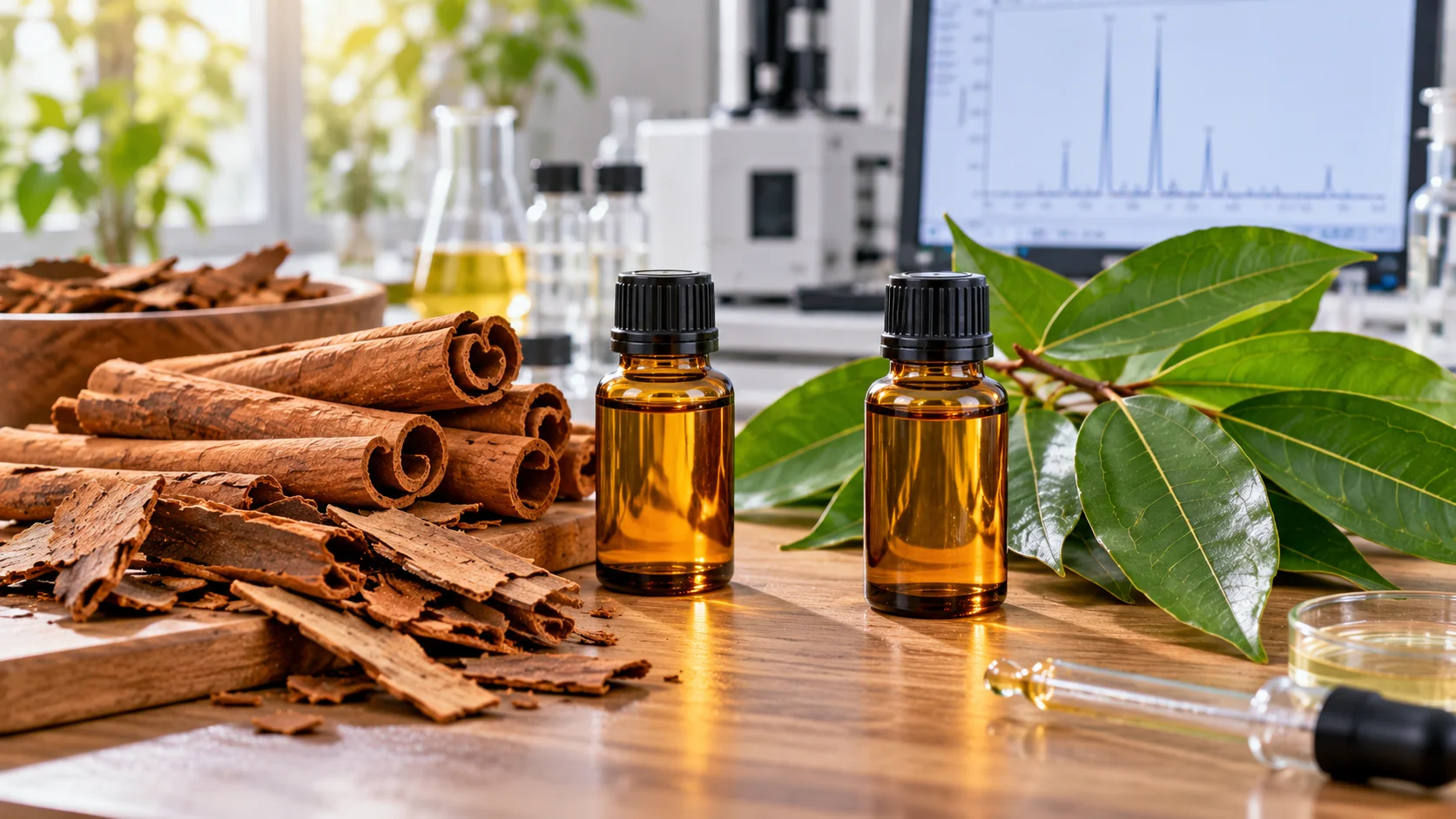
Cinnamon Bark Oil vs Cinnamon Leaf Oil: Differences and Bulk Buyer's Guide
Cinnamon bark oil vs cinnamon leaf oil is more than a choice between two warm, spicy scents. For fragrance houses, personal-care manufacturers and flavour formulators, the plant part used for distillation can change the oil's dominant aroma molecules, sensory character, price and suitability for a given formula. Buying simply “cinnamon oil” without identifying the botanical species, plant part and batch analysis can lead to an expensive formulation mismatch.
This guide compares the two oils and explains how industrial buyers in India can evaluate specifications, testing and supplier documentation. The discussion covers general sourcing considerations—not a recommendation to apply undiluted oils to skin, ingest them or use them for medical treatment.
What Are Cinnamon Bark Oil and Cinnamon Leaf Oil?
Both products are aromatic essential oils associated with plants in the Cinnamomum genus, but the name “cinnamon” does not identify a single botanical source. Cinnamon trade can include different species and origins. A professional purchase order should therefore name the species and the plant part, as well as the grade required.
Cinnamon bark oil
Bark oil is distilled from cinnamon bark. It is often described as sweet, warm, intense and characteristically cinnamon-like, with cinnamaldehyde commonly a major aroma constituent. Actual chemical composition varies with species, source, extraction method and batch.
Cinnamon leaf oil
Leaf oil is distilled from leaves and commonly offers a spicier, clove-like, somewhat woody character. Eugenol is frequently an important constituent, particularly in leaf oils from certain cinnamon sources. This difference makes leaf oil a potential alternative raw material for some aromatic applications, but not a drop-in replacement for bark oil.
Why exact botanical identity matters
“Cinnamon” may refer to Cinnamomum verum and related commercial species. A supplier's label must be backed by traceability and a certificate of analysis; the product name alone cannot establish authenticity or the expected chromatographic profile.
Cinnamon Bark Oil vs Cinnamon Leaf Oil: Side-by-Side Comparison
The distinctions below are typical characteristics used for initial buyer screening; they are not universal pass/fail specifications for every species or origin.
| Feature | Cinnamon bark oil | Cinnamon leaf oil |
|---|---|---|
| Plant part | Bark | Leaves |
| Typical dominant constituent | Often cinnamaldehyde | Often eugenol |
| Aroma character | Warm, sweet, rich cinnamon spice | Warm, spicy, more clove-like |
| Typical formulation interest | Cinnamon-forward aroma profiles | Clove-spicy accents in certain fragrances |
| Most useful purchasing evidence | Species, bark identity, GC profile, CoA | Species, leaf identity, GC profile, CoA |
Reported cinnamaldehyde and eugenol percentages differ across the scientific literature. Avoid assuming that a fixed percentage applies to every batch. Request a current GC-MS or GC-FID profile and evaluate it against your own target specification.
Which Oil Is Better for Fragrance and Personal Care?
Neither oil is universally better. Selection depends on the intended odour profile, the concentration permitted in the finished product, and applicable safety standards. A perfumer looking for a recognisable sweet cinnamon note might evaluate bark oil, while a clove-like spicy note may call for a particular leaf oil.
Fragrance development
Use small, documented evaluations to assess top, middle and dry-down characteristics in the actual fragrance base. The intensity of an essential oil in isolation may not predict its behaviour in soap, perfume or other finished applications.
Soap and cleaning products
Stability, colour, odour retention, packaging compatibility and the finished product's regulatory category can change the choice. Confirm suitability with the formulation team rather than relying on general “natural oil” positioning.
Important allergen and irritation considerations
Cinnamaldehyde (also known as cinnamal) and eugenol are recognised fragrance allergens, and concentrated cinnamon oils can be sensitising or irritating. Use the current product Safety Data Sheet (SDS), any relevant IFRA Standards, and applicable local product rules. An IFRA statement must be specific to the material and its intended end-use category; do not assume that either oil is automatically safe at a particular percentage.
Can Either Cinnamon Oil Be Used in Flavours?
Some cinnamon-derived oils are used in flavour systems, but the suitability of a specific commercial grade cannot be inferred from its aroma or a generic product page. An industrial or perfumery grade is not automatically food grade.
For food-related enquiries, state the intended food category, country of sale and required standards. Request traceability, applicable food-grade specifications, allergen information and regulatory documentation. Indian buyers should review applicable requirements of the Food Safety and Standards Authority of India (FSSAI) and obtain product-specific compliance evidence before any food use.
Quality Checks for Bulk Cinnamon Essential Oils
Purchasing teams need more than an attractive sample or an aroma description. Written acceptance criteria reduce the risk of batch-to-batch variation.
1. Botanical species and plant part
Confirm the Latin botanical name, bark or leaf origin, source country and extraction method. These details are fundamental to deciding whether a sample represents the material required for the formulation.
2. Batch-specific chemical analysis
Ask for a Certificate of Analysis (CoA) with the batch number, manufacture or testing date and relevant identity parameters. Where the process requires it, request a GC-MS or GC-FID chromatographic profile identifying the major constituents. A GC report provides useful identity evidence but should be interpreted alongside traceability and other quality controls.
3. Physical and sensory specifications
Typical buyer parameters include appearance, colour, aroma, relative density, refractive index and optical rotation where appropriate. Acceptance ranges should be agreed for the actual oil and botanical source, not invented from general internet examples.
4. Contaminant and compliance requirements
Depending on the use, request testing for impurities, solvents if relevant, adulterants, pesticide residues or other regulated substances. Confirm whether natural, organic or other marketing claims have the necessary supporting certification.
5. Packaging and delivery details
Agree on suitable sealed, compatible containers, batch labelling, handling instructions, shipping quantities and the logistics needed to minimise unnecessary heat, light and air exposure. Always follow the supplier's SDS and applicable transport rules.
BulkFineChem Cinnamon Oil Products
BulkFineChem currently lists separate pages for Cinnamon Bark Oil and Cinnamon Leaf Oil. The bark listing describes a warm, sweet and intensely spicy profile; the leaf listing describes a warm, clove-like and slightly woody profile. These descriptions can guide initial sample selection, but buyers should confirm current grade, species, batch quality documents and commercial availability directly.
A useful enquiry should specify product name, botanical species if known, required major-constituent profile, purpose (fragrance, personal care or approved flavour use), expected monthly volume, preferred packaging, delivery location and necessary CoA/SDS documents.
For general vendor qualification, read how to choose a bulk supplier in India and how to read a Certificate of Analysis.
Storage and Handling Precautions
Essential oils contain concentrated volatile chemicals. Keep containers tightly closed when not in use and follow supplier instructions for appropriate temperature, compatible packaging and protection from sunlight. Use suitable personal protective equipment where indicated by the SDS. Avoid uncontrolled inhalation and skin exposure.
Clearly separate bark and leaf oil inventory and preserve batch numbers throughout storage and production. If an incoming lot smells different from the approved reference, quarantine it for quality review rather than automatically adjusting the formula.
Frequently Asked Questions
1. Is cinnamon leaf oil the same as cinnamon bark oil?
No. They are derived from different plant parts, and their typical aroma profiles and dominant chemical constituents often differ. A formulation should specify which oil is required.
2. Which cinnamon essential oil commonly contains more cinnamaldehyde?
Cinnamon bark oil is often cinnamaldehyde-rich, but this varies with botanical species and batch. Verify the actual composition in a GC analysis.
3. Why does cinnamon leaf oil smell more like clove?
Many cinnamon leaf oils contain substantial eugenol, a compound associated with a clove-like spicy aroma. The odour still depends on the full constituent profile.
4. Can bark oil be substituted for leaf oil in a fragrance?
Not automatically. Differences in fragrance character and safety limits may require reformulation, stability testing and updated compliance review.
5. Is cinnamon oil suitable for food products?
Only when the particular material has the appropriate food-use grade and satisfies the relevant requirements for the intended product and market. Never assume a general essential oil listing establishes food suitability.
6. What documents should I request from a bulk cinnamon oil supplier?
Ask for botanical and plant-part identification, a batch CoA, current SDS, relevant chromatographic data and any additional end-use compliance statements your application requires.
Conclusion: Source the Correct Cinnamon Oil, Not Just the Correct Name
When comparing cinnamon bark oil vs cinnamon leaf oil, focus on botanical identity, actual chemical composition, intended aroma and end-use safety. The correct oil is the one that consistently meets the technical specification for your formulation.
Need cinnamon oils in bulk? Explore BulkFineChem's Cinnamon Bark Oil and Cinnamon Leaf Oil listings, then send your expected quantity, destination and required specifications. Request available batch documentation before confirming an order.