
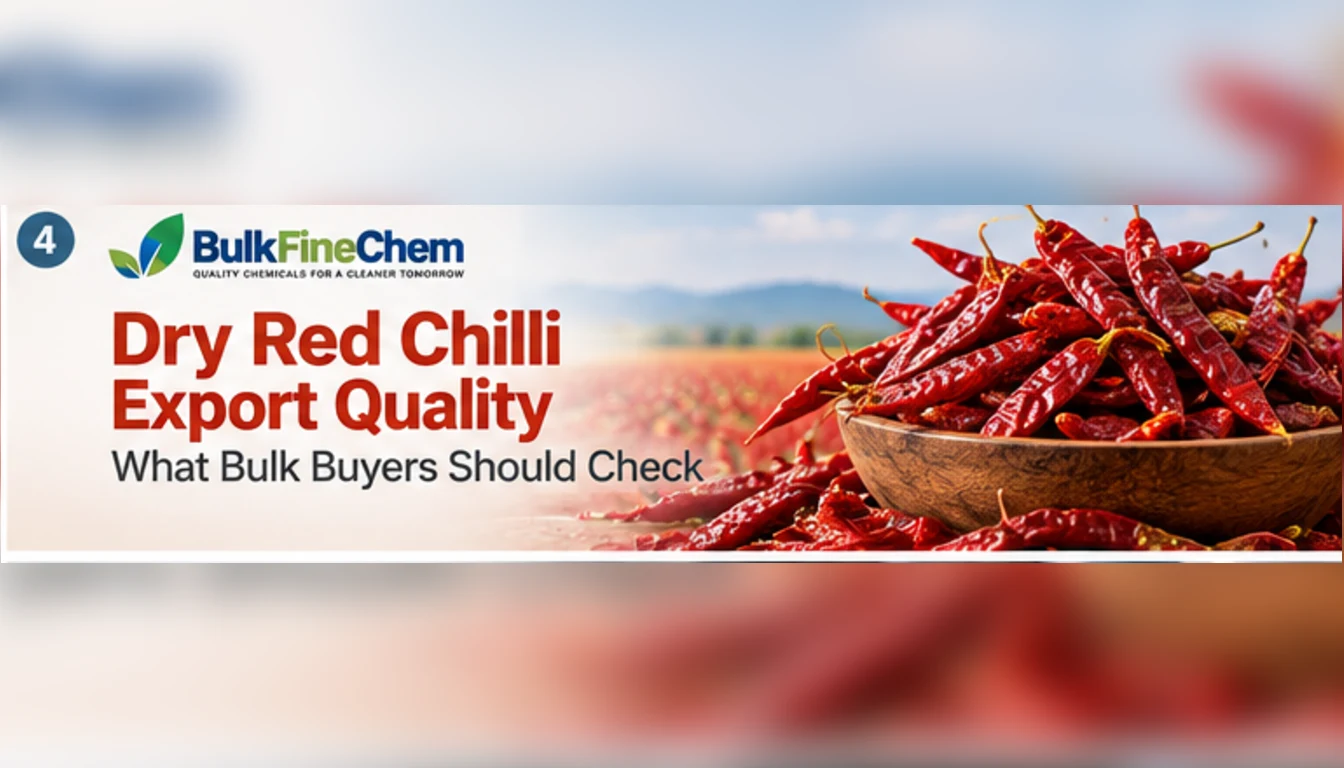
Dry red chilli export quality is not defined by appearance alone. Professional buyers normally specify pungency, colour, moisture, cleanliness, contaminant limits, variety, stem status and destination-market documentation before agreeing a shipment.
The Two Headline Numbers: SHU and ASTA Colour
Scoville Heat Units (SHU) describe pungency, while ASTA colour is widely used as a colour-value reference in the spice trade. Different chilli varieties are selected for different heat/colour balances.
BulkFineChem Dry Red Chilli
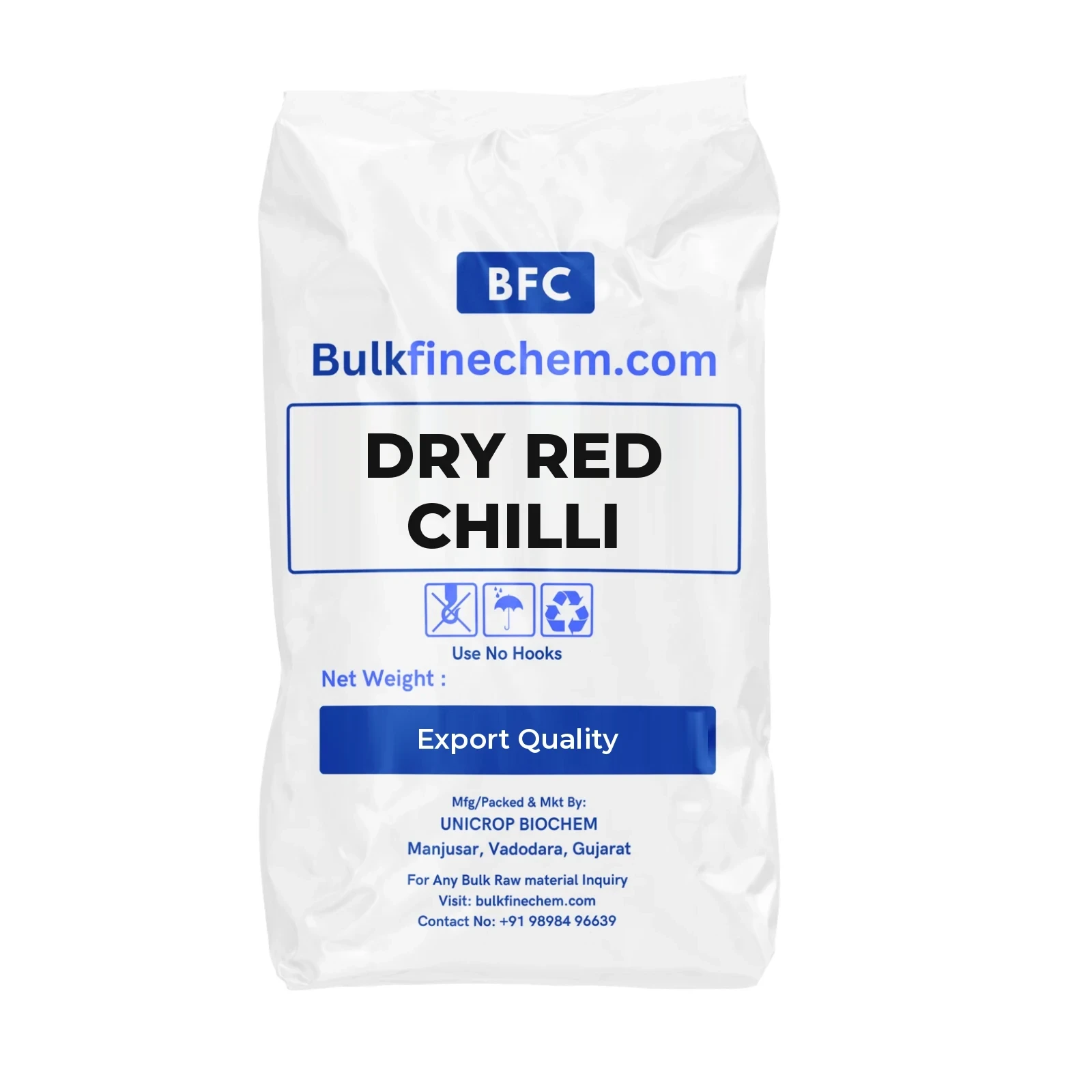
BulkFineChem lists Dry Red Chilli – Bulk Export Quality, including Teja S17, Byadgi, Guntur 334, Sannam and other varieties.
Specifications to Put in the RFQ
- Variety
- Whole, stemless or powder
- Target SHU range
- Target ASTA colour
- Maximum moisture
- Foreign matter and damaged pods
- Aflatoxin and pesticide-residue limits
- Microbiological requirements where applicable
Aflatoxin and Residue Risk
Chilli can be rejected if drying or storage allows mould growth, or if pesticide residues exceed the destination market’s limits. Export buyers should define the destination standard before sampling and testing.
Packaging and Logistics
Colour deteriorates with poor storage, heat, oxygen and light. Agree bale/carton type, liner, net weight, lot coding, fumigation requirements and container-loading conditions before dispatch.
Frequently Asked Questions
Which chilli is chosen for high heat?
High-pungency varieties such as Teja are commonly selected, but confirm the actual tested SHU.
Which chilli is chosen for colour?
Colour-focused buyers often select varieties such as Byadgi, subject to actual ASTA testing.
Should aflatoxin be tested?
Yes when required by the buyer or destination market; it is a key export-risk parameter.
Is stemless chilli better?
It offers higher usable chilli yield but usually costs more because of processing.
What documents are commonly needed?
Commercial invoice, analysis report and destination-specific export/phytosanitary documents as applicable.
Can one specification work for every country?
No. Residue and food-safety limits differ by destination.
Conclusion
Buying dry red chilli export quality means controlling measurable specifications, not relying on sample appearance alone.