
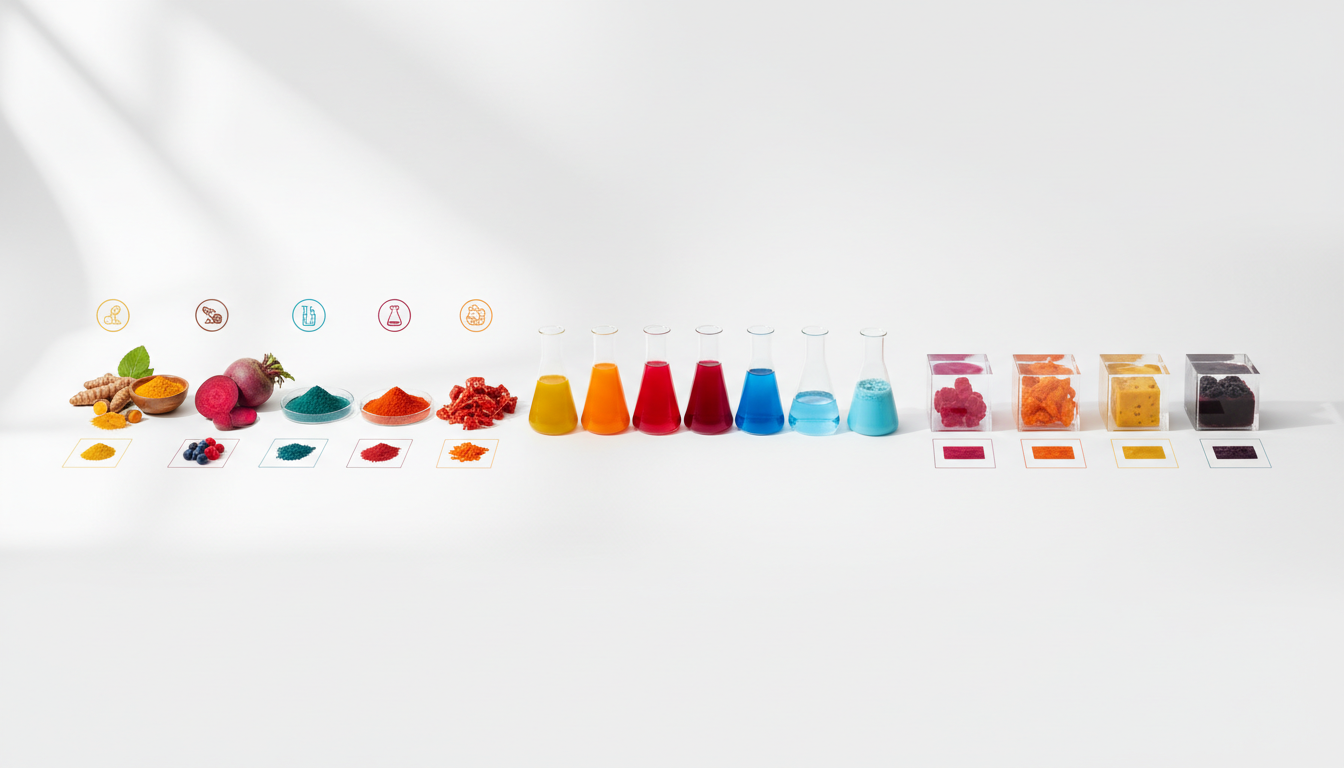
Food colour plays an important role in the appearance, identity and consumer appeal of many food and beverage products. From confectionery and bakery items to beverages, dairy products, seasonings and ready mixes, the right colour can help manufacturers achieve a consistent and attractive finished product.
For industrial buyers, choosing a food colour is not only about the shade. Solubility, stability, dosage, processing conditions, regulatory requirements and compatibility with the final formulation can all affect performance. This guide explains the main types of food colours, their common applications and the key factors to consider when sourcing them in bulk.
What Is Food Colour?
Food colours are ingredients used to add, restore or standardize colour in food and beverage products. They may be derived from natural sources or produced synthetically, depending on the type of product, target shade, processing requirements and applicable regulations.
Food colours are commonly supplied as powders, liquids, pastes or dispersions. Some are water-soluble, while others are designed for fat-based systems or require specific dispersion methods.
Main Types of Food Colours
1. Synthetic Food Colours
Synthetic colours are manufactured to provide strong, consistent and reproducible shades. They are widely used in applications where colour intensity, batch-to-batch consistency and processing stability are important.
Depending on the formulation and local regulations, synthetic colours may be used in beverages, confectionery, bakery products, dessert mixes, processed foods, coatings and other applications.
2. Natural Food Colours
Natural food colours are obtained from plant, mineral or other permitted natural sources. They are often selected by manufacturers seeking naturally positioned formulations or specific label requirements.
Natural colours can behave differently from synthetic colours. Their performance may be affected by pH, heat, oxygen, light exposure and interactions with other ingredients, so application testing is especially important.
3. Lake Colours
Lake colours are generally insoluble pigments made by converting certain soluble colours into a form suitable for dispersion in products where direct water solubility is not desirable. They are commonly considered for fat-based, coated, dry-mix and low-moisture applications.
Common Applications of Food Colours
Food colours are used across many segments of the food industry, including:
- Bakery products, cakes, icing and decorative toppings
- Confectionery, candies, gummies and coated sweets
- Soft drinks, flavoured beverages and drink mixes
- Dairy products, desserts, ice creams and frozen products
- Seasoning blends, spice mixes and savoury snacks
- Ready mixes, instant foods and powdered formulations
- Sauces, syrups, fillings and toppings
How to Choose the Right Food Colour
Target Shade and Colour Strength
The first consideration is the desired finished shade and the intensity required in the final product. The same colour can appear differently depending on the base formulation, concentration and processing method.
Solubility and Dispersion
Water-based beverages usually need a different colour format from fat-rich coatings or dry seasoning systems. Buyers should confirm whether the required product is water-soluble, oil-dispersible, or designed for dry blending.
pH Stability
Acidic beverages, neutral dairy formulations and other food systems can affect colour performance differently. A colour that performs well in one pH range may shift or lose intensity in another.
Heat and Processing Conditions
Baking, pasteurization, extrusion and other thermal processes can influence colour stability. Manufacturers should evaluate the colour under the actual time and temperature conditions used in production.
Light and Storage Stability
Some colours can fade or change when exposed to light, oxygen or prolonged storage. Packaging type, shelf-life expectations and storage conditions should therefore be considered during product development.
Regulatory Suitability
Permitted food colours, application categories, labelling rules and maximum use levels vary by country and food type. Manufacturers should verify that the selected colour complies with the regulations applicable to the destination market and intended application.
Quality Factors for Bulk Food Colour Buyers
For commercial purchasing, consistency and documentation are just as important as price. Buyers should evaluate the specification, colour strength, purity, batch consistency, packaging, shelf life and handling requirements of the material.
Depending on the product and market, relevant documents may include a certificate of analysis, technical data, safety information and food-related compliance documentation. Requirements should be confirmed before purchase rather than assumed.
Powder vs Liquid Food Colour
Powder colours are often preferred for dry mixes, concentrated formulations and applications where storage efficiency is important. They can provide strong colour intensity but require correct mixing and dispersion.
Liquid colours can be convenient for dosing and blending in liquid systems. Their suitability depends on concentration, carrier system, compatibility and the manufacturing process.
Tips for Better Colour Consistency in Production
- Use accurate weighing or dosing equipment.
- Pre-dissolve or pre-disperse the colour where appropriate.
- Control pH and processing conditions consistently.
- Test colour performance in the complete finished formulation.
- Keep records of dosage and batch performance.
- Store the colour according to the supplier's recommended conditions.
Bulk Food Colours from BulkFineChem
BulkFineChem supports industrial buyers looking for food ingredients and food colour solutions for different manufacturing applications. Product selection should be based on the required shade, formulation, processing conditions, destination market and applicable regulatory requirements.
For bulk enquiries, buyers can contact BulkFineChem with the required colour, application, quantity, target market and any technical specifications. Providing these details helps identify a more suitable product option for evaluation.
Frequently Asked Questions
Are natural food colours always more stable than synthetic colours?
No. Stability depends on the specific colour, formulation, pH, heat exposure, light, oxygen and storage conditions. Each colour should be tested in the intended application.
Can one food colour be used in every food product?
No. Solubility, processing conditions, food composition and regulatory permissions differ between applications. The selected colour must be suitable for the specific product and market.
What information should I provide when requesting a bulk food colour quotation?
Useful details include the required shade or colour name, intended application, approximate quantity, preferred form, destination country and any specification or documentation requirements.
Disclaimer: This article is for general informational purposes. Food-colour regulations and permitted uses vary by jurisdiction and product category. Manufacturers should verify current local requirements and conduct application testing before commercial use.