
IP vs BP vs USP grade oils is an important purchasing question for pharmaceutical, personal-care, oral-care and regulated formulation buyers. These abbreviations refer to recognised pharmacopoeial standards, but they should not be treated as interchangeable labels or as a simple quality ranking.
The correct choice depends on the target market, approved material specification, applicable monograph, current pharmacopoeial edition and the finished product's regulatory requirements. This guide explains the differences and shows what procurement and QA teams should verify before ordering pharma-grade oils in bulk.
What Do IP, BP and USP Mean?
IP, BP and USP are pharmacopoeial standards used to define quality requirements for medicines and pharmaceutical ingredients.
- IP — Indian Pharmacopoeia, published by the Indian Pharmacopoeia Commission.
- BP — British Pharmacopoeia, the United Kingdom's official collection of standards for pharmaceutical substances and medicinal products.
- USP — United States Pharmacopeia, published by the United States Pharmacopeial Convention and commonly accessed through USP–NF.
The Indian Pharmacopoeia Commission states that IP contains authoritative procedures and specifications for identity, purity and strength of drugs manufactured or marketed in India. BP and USP likewise publish monographs and general requirements that define how listed materials should be tested and accepted.
IP vs BP vs USP Grade Oils: Quick Buyer Comparison
| Standard | Primary Market Context | What Buyers Should Confirm |
|---|---|---|
| IP | India | Relevant IP monograph, edition, identity tests, assay/composition limits and other specified parameters |
| BP | United Kingdom and markets using BP requirements | Applicable BP/Ph. Eur. monograph, current edition and specified test methods |
| USP | United States and markets using USP–NF requirements | USP/NF monograph, current revision and required compendial tests |
These standards can overlap substantially, but the limits, test methods, reference standards and documentation requirements are not guaranteed to be identical for every oil. Procurement should therefore follow the exact material specification approved by QA or regulatory affairs.
What Does “Pharmacopoeial Grade Oil” Actually Mean?
A pharmacopoeial-grade oil should be tested against the requirements of a named pharmacopoeial monograph where one exists. That is different from a supplier simply describing an oil as “pharma grade.”
For example, a compendial monograph may specify:
- Botanical or chemical identity
- Appearance and characteristic properties
- Specific gravity or relative density
- Refractive index or optical rotation
- Chromatographic composition or marker compounds
- Acid, peroxide or other quality values where applicable
- Impurity or contaminant limits
- Packaging and storage requirements
The exact tests vary by oil and pharmacopoeia. Buyers should never assume that all essential oils, fixed oils or carrier oils use the same acceptance criteria.
Why IP, BP and USP Are Not a Simple Quality Ranking
It is misleading to say that USP is “better” than BP, BP is “better” than IP, or vice versa. These are standards written for different regulatory systems and markets.
The intended market matters
If a finished product will be manufactured or marketed under Indian requirements, the approved specification may call for IP. A product intended for the United States may specify USP–NF. A UK or other BP-based specification may call for BP.
The monograph matters more than the abbreviation
Two standards may use similar tests but different acceptance limits or reference methods. The buyer should therefore compare the actual monographs rather than relying only on the letters printed on a supplier quotation.
The current edition matters
Pharmacopoeias are periodically revised. A supplier should be able to state which edition or current monograph was used when testing a batch.
Example: Peppermint Oil IP/BP/USP
BulkFineChem lists Peppermint Oil IP/BP/USP for pharmaceutical, oral-care, flavouring, personal-care and formulation applications.
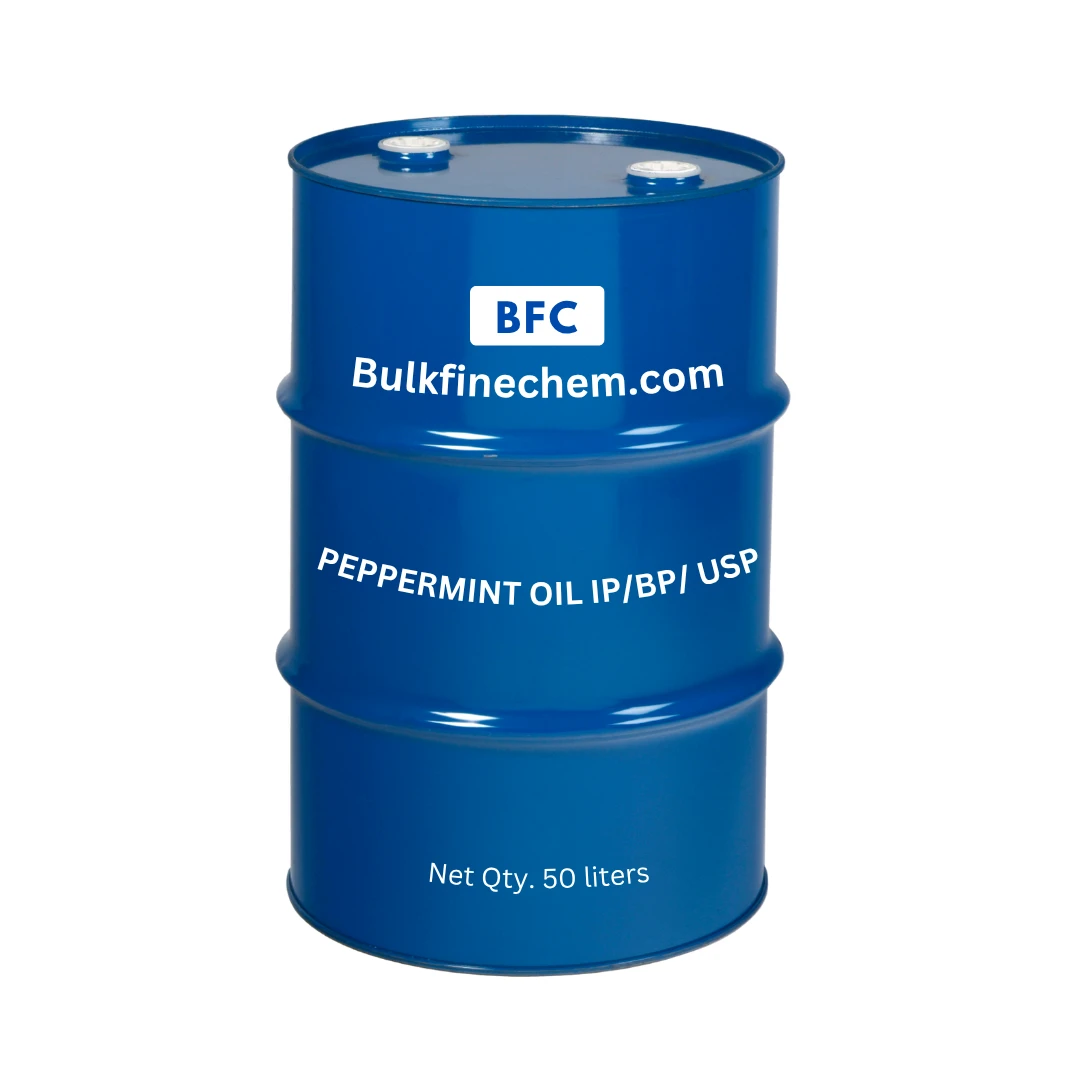
Peppermint oil is a good example of why monograph verification matters. USP publishes a defined monograph for peppermint oil, and other pharmacopoeias also maintain specifications for peppermint oil. A buyer should therefore state the required compendial standard in the purchase specification and verify that the batch COA reports the required tests.
Other BulkFineChem Pharmacopoeial Oil Examples
Eucalyptus Oil IP/BP
BulkFineChem's Eucalyptus Oil IP/BP is positioned for pharmaceutical, inhalation, oral-care, personal-care and formulation use. Buyers should specify whether the required batch must comply with IP, BP or both.
Sunflower Oil BP/USP
Sunflower Oil BP/USP is used as a fixed oil and excipient in pharmaceutical, cosmetic and topical formulations. Because it is a fixed oil rather than an essential oil, its relevant compendial tests differ from those used for volatile oils.
Fennel Oil USP
Fennel Oil USP is offered for pharmaceutical, flavouring, oral-care and personal-care applications where a USP-aligned material specification is required.
What Procurement Teams Should Put on the Purchase Order
A clear purchase specification reduces the risk of receiving a technically acceptable oil that does not match the intended regulatory requirement.
- Exact material name. Use the compendial or approved internal material name.
- Required standard. State IP, BP, USP–NF or another applicable pharmacopoeia.
- Edition or current monograph requirement. Avoid vague wording when the internal specification requires a defined revision.
- Critical tests and limits. Identify any parameters that are especially important to your formulation or release process.
- Batch COA requirement. Require a certificate tied to the supplied lot.
- Packaging and storage. Specify container type, pack size, light protection, temperature or other handling requirements where relevant.
- Regulatory documents. Request TDS, SDS, allergen, origin or other documents required by your quality system.
How to Review a COA for IP, BP or USP Grade Oil
Check that the stated standard matches the PO
If the purchase order specifies BP, a COA that only states “pharma grade” is not enough. The compendial claim should be explicit and supported by the reported test results.
Compare reported results with the approved specification
QA should verify that all required tests are present and that the results fall within the approved limits.
Confirm batch identity
The COA should correspond to the actual batch number supplied. This is especially important when the same product is sold in multiple grades.
Review test methods and reference standards
For critical materials, confirm that tests were performed according to the required pharmacopoeial method or an appropriately validated alternative permitted by your quality system.
Can One Grade Replace Another?
Not automatically. An IP, BP or USP grade may be similar enough for a specific application, but substitution should be approved through the buyer's QA and regulatory process.
Before approving a substitution, compare:
- Monograph identity requirements
- Assay or marker-compound limits
- Physical constants
- Impurity requirements
- Microbiological or contaminant controls where applicable
- Packaging and storage requirements
- Finished-product registration commitments
A supplier's statement of equivalence should not replace the buyer's documented assessment.
Common Buying Mistakes to Avoid
- Ordering “pharma grade” without naming the pharmacopoeia
- Assuming IP, BP and USP requirements are identical
- Using an old COA from a different batch
- Ignoring the pharmacopoeial edition or revision
- Comparing oils only by price instead of complete specification
- Approving a substitute grade without QA or regulatory review
- Failing to confirm storage and packaging requirements for volatile oils
Frequently Asked Questions
What is the difference between IP, BP and USP grade oils?
They are oils tested against different pharmacopoeial standards. The exact limits and methods depend on the relevant monograph, so the grades should not be assumed to be identical.
Is USP grade better than IP or BP grade?
No. The correct grade is the one required by the applicable regulatory market, approved specification and product dossier. These standards are not a simple quality ranking.
Can BP grade oil be used when an IP grade is specified?
Only if the buyer's QA and regulatory teams approve the substitution after comparing the applicable requirements and product commitments.
What should a COA for pharmacopoeial oil show?
It should identify the material and batch, state the relevant pharmacopoeial standard, list required tests, report results and show compliance with the approved specification.
Do essential oils and fixed oils have the same pharmacopoeial tests?
No. Test requirements vary by material. Volatile essential oils and fixed carrier oils can have very different identity, composition and quality tests.
Should buyers specify the pharmacopoeial edition?
Where your quality system or regulatory filing requires a defined edition or current monograph, yes. This avoids ambiguity when standards are revised.
Where can I source pharmacopoeial-grade oils in bulk?
BulkFineChem lists a range of pharma-grade oils including peppermint, eucalyptus, sunflower, fennel and other IP, BP and USP-labelled materials. Buyers should submit the exact required grade, quantity, packing and application when requesting a quote.
Conclusion
The IP vs BP vs USP grade oils decision should be driven by the approved material specification, target market and applicable pharmacopoeial monograph—not by a generic assumption that one abbreviation represents a higher quality level.
For reliable procurement, specify the exact compendial standard, verify the current batch COA, compare the required tests and limits, and route any grade substitution through QA and regulatory review.
Need a bulk quotation? Explore BulkFineChem's Pharma Grade Oils range and share your required IP, BP or USP grade, quantity, packing and destination.