
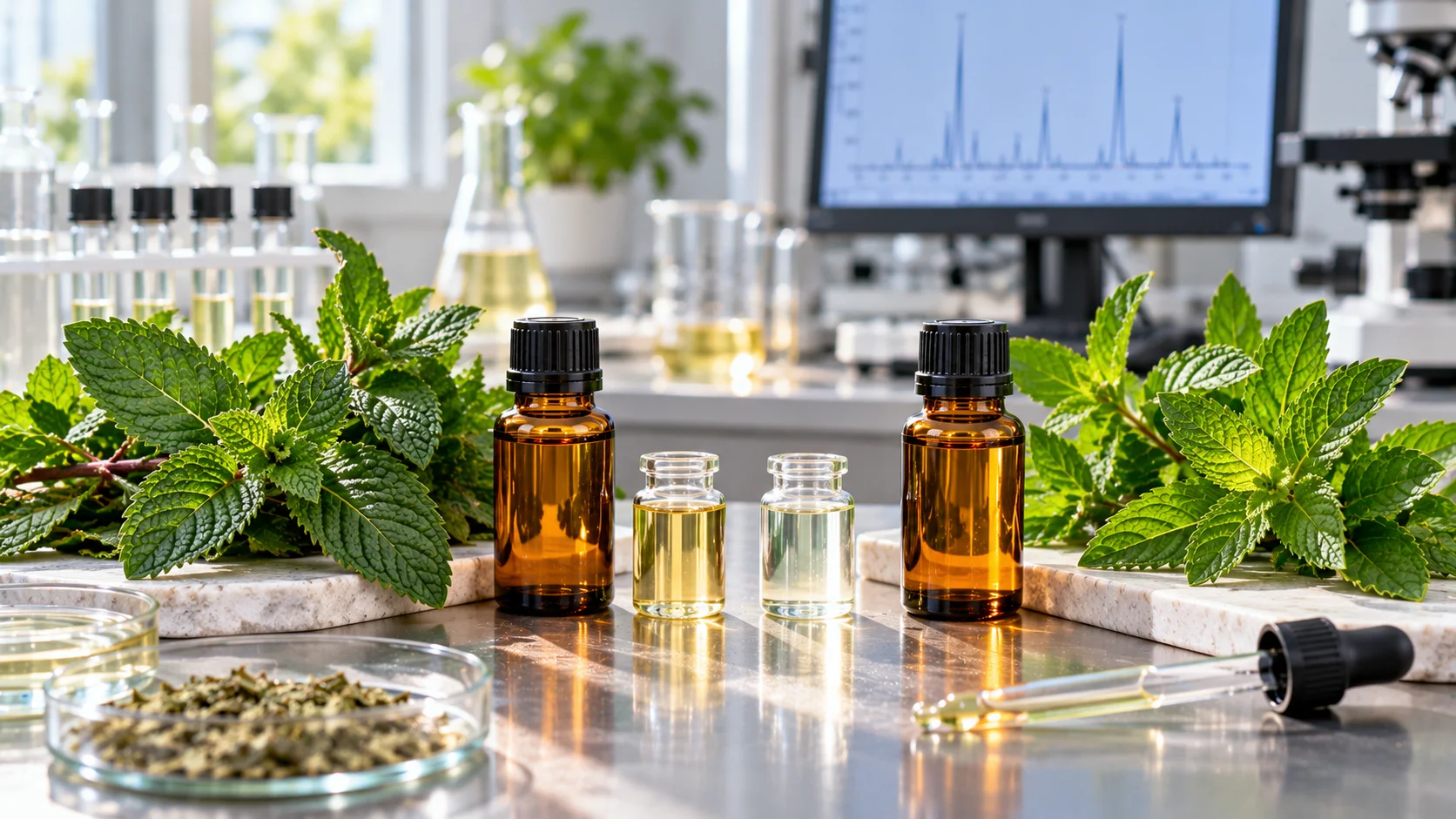
Peppermint Oil vs Spearmint Oil: Composition, Uses and Bulk Buying Guide
Peppermint oil vs spearmint oil is an important comparison for manufacturers sourcing mint ingredients for oral care, personal care, fragrance and approved flavour applications. Both smell minty, but they come from different botanical sources and typically have different major aroma constituents. Those differences affect the sensory profile, quality specification and suitability of a particular batch.
For a procurement team, the question is not which mint oil is universally better. It is which identified, tested grade fits the intended formulation and applicable safety or regulatory requirements. This guide compares the two oils and outlines a practical bulk-buying process for Indian businesses.
What Is Peppermint Essential Oil?
Peppermint oil is obtained from peppermint, generally identified botanically as Mentha × piperita. It has a strong, fresh, cooling mint character. Menthol and menthone are commonly important constituents, although their relative proportions vary with origin, harvest, plant material and processing.
What gives peppermint its cooling profile?
Menthol contributes a characteristic cooling sensation and is a major reason peppermint-type profiles are considered for certain oral-care, flavour and fragrance products. Whole peppermint essential oil is not the same as isolated menthol, and its actual composition must be confirmed using batch data.
Typical industrial formulation areas
Approved grades can be assessed for toothpaste and oral-care flavour systems, personal-care fragrances and specialised flavour applications. Suitability is determined by the intended product category and the applicable end-use standard, not merely the product's natural origin.
What Is Spearmint Essential Oil?
Spearmint oil commonly comes from Mentha spicata, using suitable aerial plant material. It is generally described as sweeter, gentler and less sharply cooling than peppermint. Carvone, particularly the spearmint-associated enantiomer, is commonly a significant aroma constituent, along with other terpenes that affect the finished odour.
Why does spearmint smell different?
The difference is primarily the overall volatile compound profile. A carvone-forward oil can have a sweet, herbal mint note quite unlike the more menthol-rich, cooling character associated with many peppermint oils.
Applications for spearmint oil
Spearmint-type aroma profiles are evaluated for oral-care products, perfumes, personal-care products and permitted flavour formulations. A supplier's generic product description is not proof of food-grade status or regulatory acceptance.
Peppermint Oil vs Spearmint Oil: Key Differences
Use these distinctions for initial screening, then compare actual supplier technical data and samples. Chemical profiles vary among cultivars, growing locations and batches.
| Factor | Peppermint oil | Spearmint oil |
|---|---|---|
| Typical botanical name | Mentha × piperita | Mentha spicata |
| Common prominent components | Menthol and menthone | Carvone and other terpenes |
| General sensory description | Strong, fresh, cooling mint | Sweeter, softer, herbal mint |
| Selection question | Does the formulation need an intense cooling mint note? | Does the formulation need a sweeter mint note? |
| Essential quality evidence | Species, batch CoA, GC profile and use-specific compliance | Species, batch CoA, GC profile and use-specific compliance |
Why Menthol and Carvone Matter for Bulk Buyers
Mint oil specifications often pay attention to particular volatile markers. The proportions of menthol, menthone and carvone help buyers assess identity and formulation consistency, but no single constituent proves purity or suitability on its own.
Understand the whole chromatographic profile
A GC-FID or GC-MS report can show multiple components and help detect unusually different batches. Review the tested data alongside botanical traceability, physical specifications, the supplier's manufacturing process and the required standard. If comparing two chromatograms, make sure their reporting methods and bases are compatible.
Do not assume fixed percentages
Although peppermint is commonly associated with menthol and spearmint with carvone, percentage ranges depend on the botanical and grade definitions. Request the target limits applicable to your approved formulation, rather than copying an internet average into a purchase order.
Choosing Mint Oil for Oral Care, Fragrance and Flavours
Mint oils can play different roles across consumer-product industries. Application must be specified before placing a bulk order, because the same material may be unsuitable for a different end use.
Oral-care formulations
Mint aroma is familiar in toothpaste and mouth-care products. Product selection involves sensory evaluation, ingredient compatibility, concentration limits and any relevant consumer-product standard. Neither peppermint nor spearmint oil should be substituted without formulation and safety review.
Perfume and personal care
Compare the complete fragrance composition in the intended base, including how the mint character changes over time. Review relevant IFRA Standards and the supplier's safety documentation. Essential oils can contain sensitising constituents; natural origin does not remove the need for risk assessment.
Food and beverage flavour applications
Only an appropriately specified and compliant grade should be evaluated for food use. Where products are sold in India, buyers should check applicable FSSAI requirements, ingredient traceability and suitable end-use documentation. An industrial or aromatherapy grade is not automatically food grade.
Quality Control Checklist for Peppermint and Spearmint Oil
To avoid receiving an inconsistent mint profile, agree on measurable and documentable acceptance criteria before confirming a recurring supply agreement.
- Botanical identity: record scientific name, plant part, geographic origin and extraction method.
- Batch Certificate of Analysis: confirm lot number, date of testing, identity, key chemical markers and agreed parameters.
- GC-MS or GC-FID analysis: use the chromatographic composition when required to support authenticity and consistency checks.
- Physical quality: check appearance, colour, relative density, refractive index and optical rotation as applicable to the grade.
- Contaminant controls: obtain relevant pesticide, solvent, adulteration or other test data where required by intended use.
- Regulatory requirements: request food, cosmetic or fragrance compliance documentation appropriate to the actual end market.
- Packaging and transport: verify compatible sealed packaging, batch identification and handling conditions.
For more advice on reading batch records, use BulkFineChem's Certificate of Analysis guide.
BulkFineChem Peppermint Oil and Spearmint Oil Listings
BulkFineChem lists both Peppermint Oil and Spearmint Oil. The peppermint listing describes a strong, cooling mint aroma; the spearmint listing describes a sweeter and milder mint aroma. These are initial sensory descriptions, not a substitute for batch-specific technical data.
What to include in a bulk enquiry
Tell the supplier which oil you require, botanical identity, intended application, quality specification, expected order volume, packing preference, destination and requested batch documents. Confirm the quoted grade and the scope of any compliance certification before purchase.
For supplier selection more broadly, see how to choose a bulk chemical supplier in India.
Storage and Handling Precautions
Essential oils contain concentrated volatile materials. Follow the current Safety Data Sheet for the exact grade and use suitable, tightly closed containers in conditions specified by the supplier. Limit avoidable exposure to heat, air and light; keep batch labels intact. Handle spills and personal exposure through site-approved procedures.
Do not apply concentrated oils directly to skin, use them therapeutically or consume them based on a general product description. Suitable use and concentration depend on the intended formulation, regulatory category and safety assessment.
Frequently Asked Questions
1. What is the main difference between peppermint and spearmint oil?
Peppermint oil is commonly menthol- and menthone-associated, creating a stronger cooling character. Spearmint oil is often carvone-forward, producing a sweeter mint profile. Exact composition requires batch testing.
2. Are peppermint oil and spearmint oil interchangeable?
Not automatically. Their different sensory profiles and constituents may require reformulation, stability checks and end-use safety review before substitution.
3. Which oil has more menthol?
Peppermint oil generally has more menthol than typical spearmint oil. However, confirm actual concentrations on each supplier's chemical profile and CoA.
4. Which oil is better for toothpaste or oral-care products?
Both are candidates for appropriately specified oral-care formulations. The better fit depends on taste, cooling requirements, compatibility, concentration and regulatory requirements.
5. Is essential oil labelled natural automatically food grade?
No. Natural origin or an essential-oil label does not prove suitability for food use. Request a specifically appropriate grade and compliance evidence.
6. What documents should bulk mint-oil buyers request?
Ask for a batch CoA, current Safety Data Sheet, relevant chromatographic testing, botanical identification and any end-use-specific quality or compliance statements.
Conclusion: Choose by Verified Composition and End Use
For peppermint oil vs spearmint oil, the correct buying decision depends on botanical identity, sensory requirements, tested composition and safe intended use. Compare representative samples and documented specifications before approving a larger order.
Planning bulk mint-oil sourcing? View BulkFineChem's Peppermint Oil and Spearmint Oil product pages, then send your volume, quality requirements and delivery destination for a quotation.