
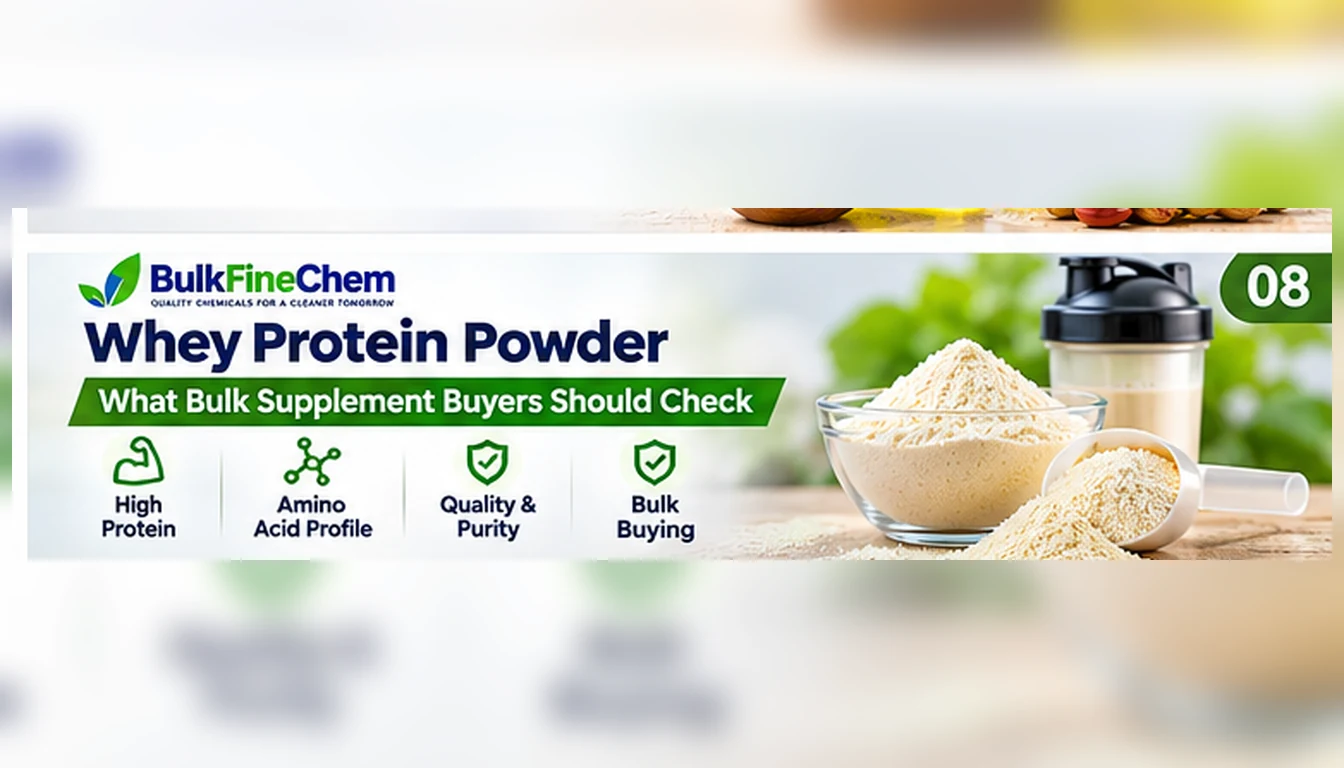
Whey protein powder bulk sourcing requires more than comparing the protein percentage printed on a quotation. Supplement, food and nutrition manufacturers should also review solubility, moisture, microbiology, flavor, particle behavior, packaging and batch consistency before qualifying a supplier.
BulkFineChem supplies Whey Protein Powder for food, nutrition and supplement formulation buyers.
Start with the Protein Specification
“Whey protein powder” can describe materials with different protein, fat, lactose and mineral content. Buyers should define the required protein basis and analytical method rather than assuming all whey powders are equivalent.
Protein Content and Basis
Confirm whether the protein value is reported on an as-is or dry-matter basis. A small difference in moisture can change the apparent protein percentage, so both parameters should be reviewed together.
Solubility and Dispersibility
A powder that meets protein specification can still perform poorly in a beverage if it clumps or disperses slowly. Formulators should test the material in the actual water temperature, mixing system and finished recipe.
Practical checks
- Wetting time
- Clumping
- Sedimentation
- Foam behavior
- Texture after hydration
Flavor, Color and Sensory Quality
Natural dairy ingredients can vary in flavor and color. If the whey will be used in a lightly flavored product, sensory consistency can be as important as protein percentage.
Microbiological Quality
Food and supplement manufacturers should define microbiological limits appropriate to their product and market. Incoming inspection may include total plate count and specified pathogen or indicator tests according to the approved raw-material standard.
Moisture and Shelf Stability
Excessive moisture can contribute to caking and quality deterioration. Buyers should review moisture limits and store the powder in dry conditions with intact packaging.
What to Check on the COA
- Protein content
- Moisture
- Fat and ash where required
- Lactose or carbohydrate where specified
- Microbiological results
- Appearance and odor
- Batch number and test date
Packaging and Logistics
Powder packaging should protect against moisture and contamination. Buyers should confirm bag construction, liner, net weight, palletization and lot identification before ordering production volumes.
Supplier Qualification
- Define protein and quality specifications.
- Review sample COA and technical data.
- Test a representative sample in the finished formula.
- Confirm microbiology and allergen documentation.
- Approve packaging and logistics.
- Review the actual batch COA before release.
Whey Protein for Different Product Formats
Powder blends
Flow and particle compatibility matter for premixes, sachets and tubs.
Ready-to-mix beverages
Dispersibility, foam and mouthfeel become especially important.
Bars and foods
Protein functionality, moisture and flavor should be assessed in the full recipe.
Frequently Asked Questions
Is higher protein percentage always better?
No. The correct grade depends on the formulation, cost target and sensory requirements.
Why does whey protein clump?
Particle properties, mixing conditions, temperature and formulation composition can all affect wetting.
Should microbiology be on the COA?
It should be included when required by the agreed food or supplement specification.
Why is moisture important?
Moisture affects powder stability, caking and the interpretation of protein content.
What packaging is best?
Use packaging that protects the powder from moisture, contamination and transport damage.
Does BulkFineChem supply whey protein powder?
Yes. BulkFineChem lists Whey Protein Powder for bulk formulation buyers.
Conclusion
Successful whey protein powder bulk sourcing combines protein specification with solubility, microbiology, moisture, sensory testing and packaging control.
Need a bulk quote? Share your required protein specification, quantity, packaging and application with BulkFineChem.