
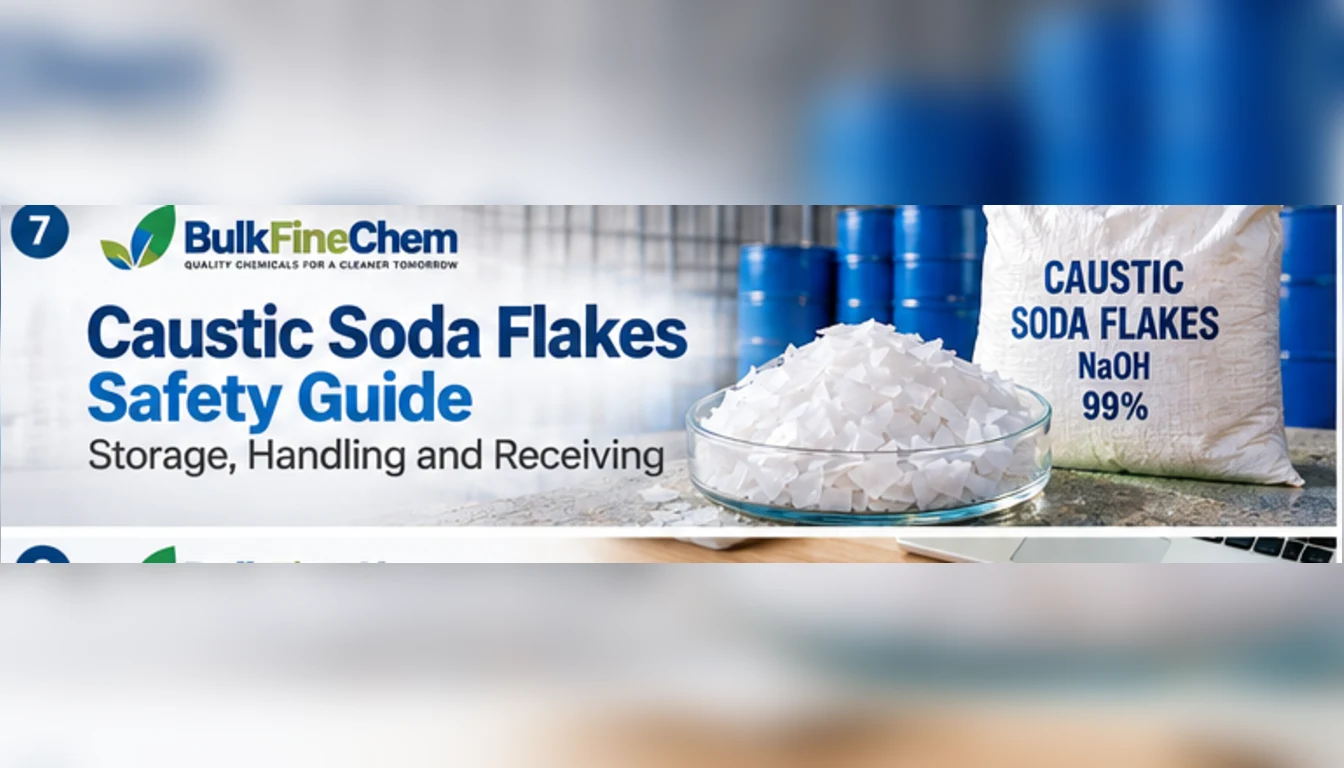
Caustic soda flakes safety starts with understanding two properties: sodium hydroxide is strongly corrosive, and dry flakes are highly hygroscopic. Poor handling can cause severe chemical burns, damaged packaging, hardened product and dangerous heat release during solution preparation.
Main Hazards
NIOSH notes that sodium hydroxide can severely damage eyes, skin and mucous membranes. Direct contact must be prevented through engineering controls, PPE and safe work procedures.
BulkFineChem Caustic Soda Flakes
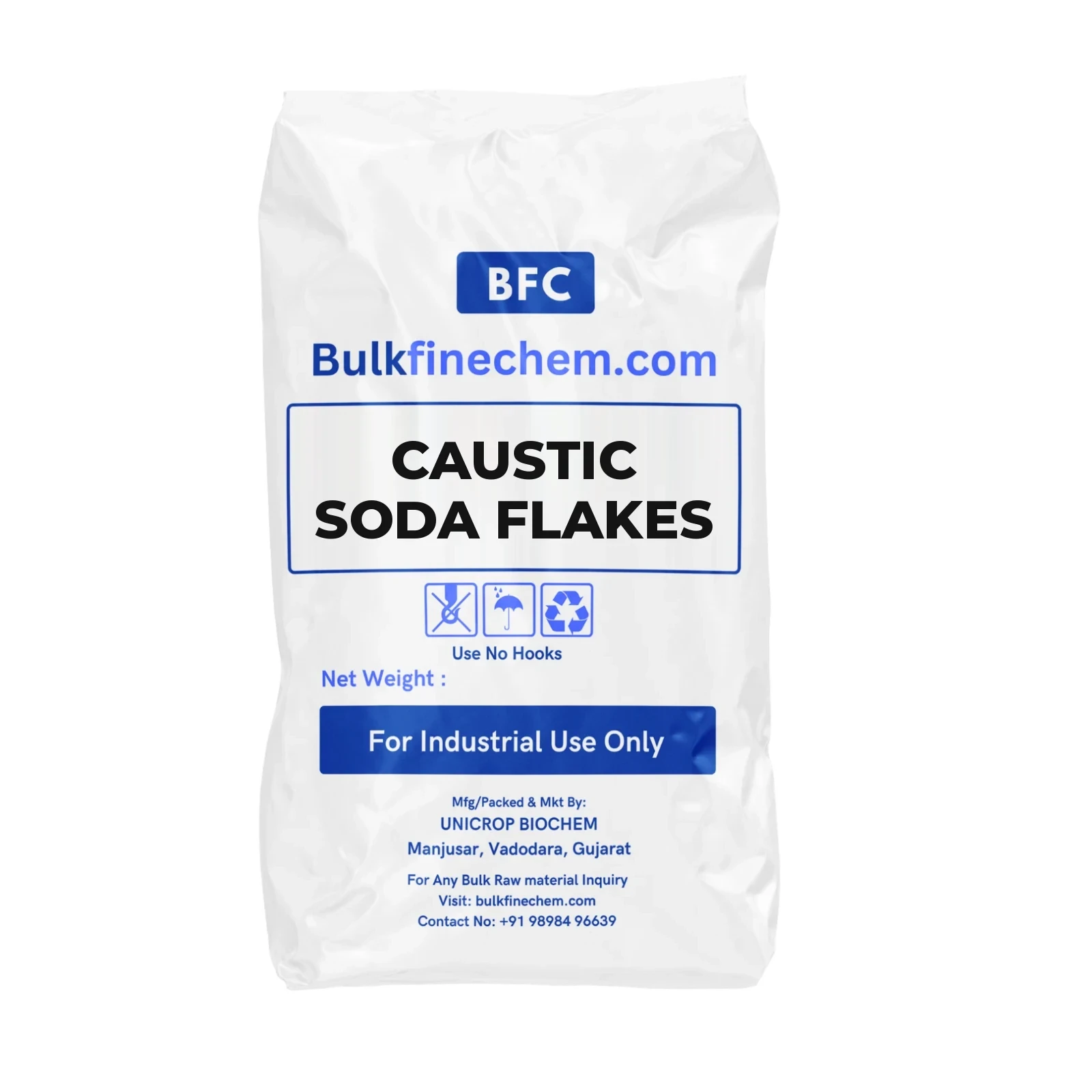
BulkFineChem lists Caustic Soda Flakes – Sodium Hydroxide 98% for soap, textile, water-treatment and chemical-processing applications.
Storage Basics
- Keep bags sealed and dry
- Protect from moisture and carbon dioxide
- Separate from acids and incompatible metals
- Use corrosion-resistant storage and transfer materials appropriate to concentration
- Maintain clear hazard labels and restricted access
PPE and Work Practices
Follow the SDS and site risk assessment. Typical controls can include chemical goggles, face protection, suitable gloves, protective clothing and emergency eyewash/shower facilities. PPE must be selected for the task and concentration.
Preparing Caustic Solutions
Dissolving NaOH releases substantial heat. Add caustic slowly to water under controlled mixing and cooling; do not pour water onto a concentrated mass of caustic flakes. Use a written operating procedure and equipment designed for the exothermic load.
Receiving Checklist
- Check bag integrity and dryness
- Confirm batch and COA
- Verify labels and SDS availability
- Inspect for hardening or moisture damage
- Confirm segregated storage space before unloading
Frequently Asked Questions
Why do caustic soda flakes harden?
They readily absorb moisture and carbon dioxide from air, causing caking and quality changes.
Can caustic be stored near acids?
No. Segregate incompatible chemicals according to the SDS and site chemical-storage plan.
Is dust hazardous?
Yes. Airborne caustic dust can irritate or burn the respiratory tract and eyes.
What happens when caustic dissolves?
The dissolution is strongly exothermic and can generate dangerous heat.
What emergency equipment is important?
Eyewash and emergency shower access is important where corrosive exposure is possible.
Should every delivery have a COA?
For controlled procurement, buyers should match the batch COA to the delivered lot.
Conclusion
Good caustic soda flakes safety depends on dry storage, incompatibility control, correct PPE, disciplined solution preparation and documented receiving checks.