
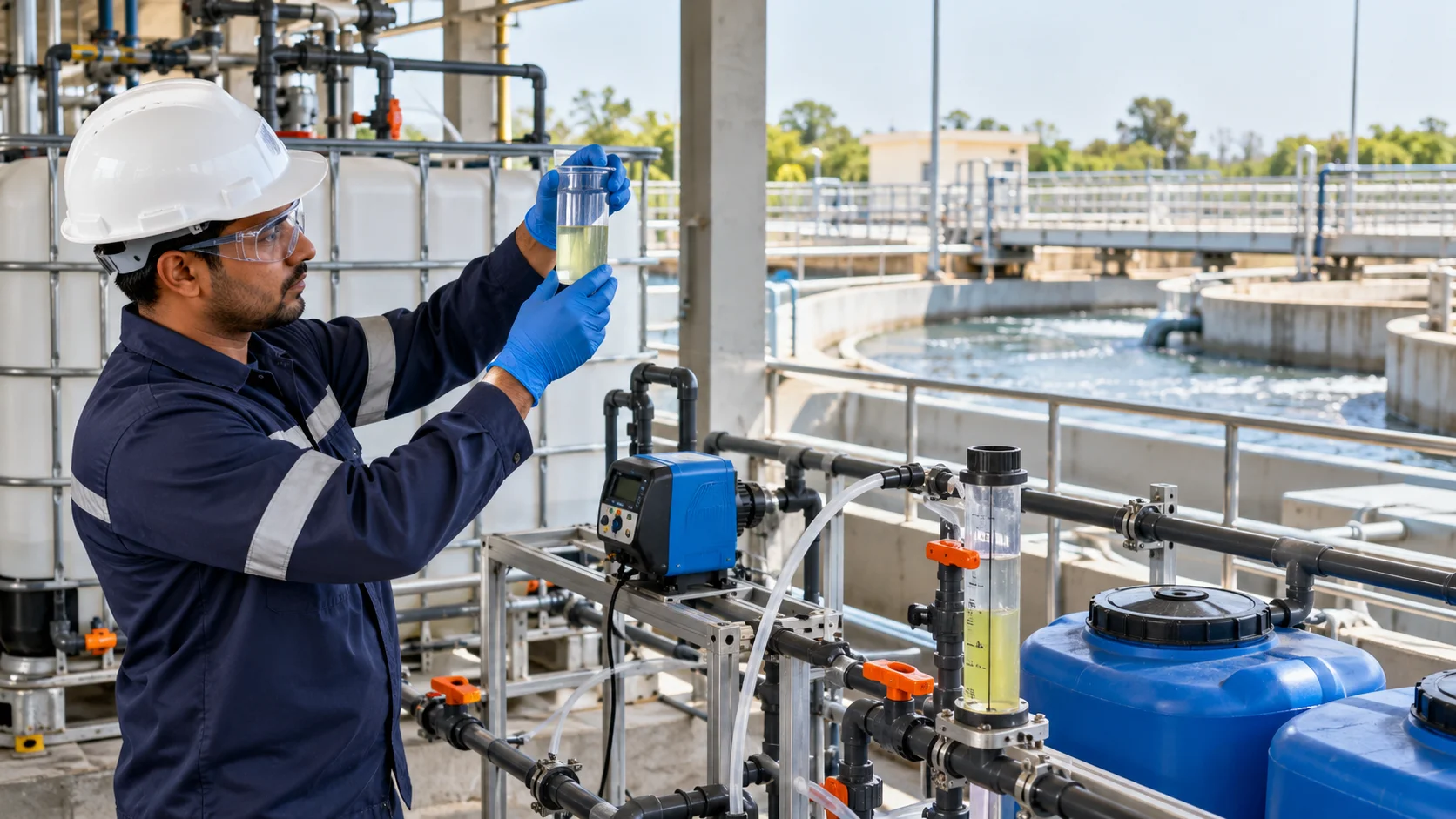
Sodium Hypochlorite for Water Treatment: Uses, Storage and Bulk Buying Guide
Sodium hypochlorite for water treatment is a practical liquid-disinfection option for municipal water systems, industrial treatment plants and some wastewater applications. But sourcing it is not simply a matter of selecting a supplier with the lowest price per kilogram. Buyers need to understand available-chlorine strength, freshness, suitability for the intended water use, safe storage and the documentation supplied with each lot.
This guide explains what plant operators, procurement teams and industrial buyers should check when purchasing liquid sodium hypochlorite in India. It is a purchasing and safety overview—not a substitute for a plant-specific disinfection plan, applicable standards or the product Safety Data Sheet (SDS).
What Is Sodium Hypochlorite and How Does It Treat Water?
Sodium hypochlorite (NaOCl, CAS 7681-52-9) is an alkaline chlorine-based oxidizing agent supplied as an aqueous solution. In water, it contributes the disinfecting chlorine species that help inactivate microorganisms. Its liquid form can be metered with suitable chemical dosing equipment, avoiding the need to handle pressurized chlorine gas.
Common applications in water treatment
- Municipal drinking-water disinfection: for use only with a chemical grade suitable for potable-water treatment and after confirmation of local requirements.
- Wastewater and sewage treatment: in final disinfection systems designed and monitored for the specific effluent.
- Industrial process-water systems: where microbial control forms part of an engineered water-treatment program.
- Facility sanitation: in approved cleaning and sanitation procedures, with application-specific concentrations and contact times.
The effective disinfectant demand changes with the quality of incoming water, including organic matter, pH and contact time. Therefore, operators should verify residual chlorine and treatment performance using their own validated monitoring procedures rather than assume a fixed dose will work in every plant.
Sodium Hypochlorite for Water Treatment: What Does 10–12% Mean?
Commercial sodium hypochlorite is often sold by a nominal concentration such as 10–12%. This description is useful for product identification, but it is not enough on its own to set chemical feed rates or compare quotations.
Check available chlorine, not only the product name
Available chlorine describes the solution's oxidizing/disinfection capacity expressed relative to chlorine. Purchasing documents must identify how it is measured and reported. A percentage reported by mass (w/w) is not automatically interchangeable with a percentage reported by mass per volume (w/v). Ask the supplier to state the unit and, where relevant, provide the measured value in grams per litre.
Ask for the test date and batch certificate
Hypochlorite solutions gradually lose available chlorine during storage. For an incoming delivery, ask for a batch-specific Certificate of Analysis (CoA), manufacture or packing date, and test date. The measured batch strength matters more than a nominal value in the product title.
Specify the intended use before ordering
Industrial and potable-water applications may carry different chemical-quality requirements. In India, BIS IS 11673 (Part 2):2019 addresses sodium hypochlorite intended for drinking-water treatment. Buyers should obtain evidence of conformity where required; the existence of a standard does not mean a particular supplier's product is certified to it.
Five Quality Checks Before Buying Sodium Hypochlorite in Bulk
A useful purchase specification should be based on measurable properties and the intended treatment process—not only a price quote.
| What to check | Why it matters |
|---|---|
| Available-chlorine concentration and reporting unit | Supports comparable quotations and appropriate process calculations |
| Batch number, production/packing date and CoA | Helps assess traceability, tested strength and freshness |
| Required purity and use-specific standards | Important where potable-water or regulated applications are involved |
| SDS and suitable packaging | Supports safe receiving, handling and storage |
| Delivery schedule and estimated consumption | Reduces unnecessary stock ageing and losses from degradation |
For broader procurement planning, read BulkFineChem's guide to sourcing water treatment chemicals and guide to reading a Certificate of Analysis.
Storage and Handling: Protect Quality and People
Sodium hypochlorite is corrosive and can decompose faster with heat, sunlight, contamination and time. The US EPA's sodium hypochlorite supply-chain profile identifies storage temperature, pH, strength, impurities and container conditions as important influences on stability. In addition to lower available chlorine, poor storage can contribute to unwanted byproduct formation.
Keep it cool, shaded and segregated
Use approved, compatible containers and transfer systems as specified by the manufacturer's SDS and plant engineering team. Protect stocks from direct sunlight and avoid holding more solution than the plant expects to consume within a sensible turnover period. Site-specific requirements for containment, ventilation and emergency response should be established before accepting a bulk delivery.
Never combine with incompatible chemicals
Do not mix sodium hypochlorite with acids or ammonia. These combinations can release dangerous gases. Store it separately from incompatible products and use dedicated, clearly identified chemical-transfer equipment. The CDC's chlorine-disinfectant guidance also highlights hypochlorite's corrosive nature and gas-release hazards.
Test strength when stock has aged
Bulk hypochlorite is not a chemical to buy in very large quantities without considering turnover. If storage has been prolonged or exposed to heat, operators should evaluate available chlorine against the plant's acceptance and operating specifications. Chemical feed settings must be managed by qualified personnel according to site procedures.
Packaging, Logistics and Bulk Procurement in India
Procurement planning should consider storage capacity, daily consumption, transportation distance and the type of receiving system. A modestly sized, fresh delivery may perform better operationally than a much larger shipment left standing for weeks.
BulkFineChem currently lists Sodium Hypochlorite Solution – 10 to 12 Percent, with 35 kg and 250 kg HDPE pack options and tanker supply described on its product page. The listing also identifies a 250 kg minimum order quantity, a batch CoA with dispatch and SDS/TDS documentation available on request. Confirm current availability, pack sizes and logistics with the team before ordering.
Sodium hypochlorite solution listed by BulkFineChem. Check the current batch CoA and packing specifications before purchase.
Information to include in your purchase enquiry
- Application: potable water, wastewater, process water or sanitation
- Requested available-chlorine strength, reporting unit and acceptable tolerance
- Order volume, preferred pack type and delivery location
- Likely monthly consumption and delivery frequency
- Required test certificates, SDS and any sector-specific standards
- Any receiving, unloading or chemical-compatibility constraints at your site
Ask for total landed cost and quality documentation rather than comparing price per kilogram in isolation.
Frequently Asked Questions
1. Is sodium hypochlorite used for drinking-water disinfection?
Yes, sodium hypochlorite is used for drinking-water treatment, provided the chemical meets the applicable potable-water specifications and the facility operates a validated treatment process. A general industrial grade should not automatically be assumed suitable.
2. Does a 10–12% solution always contain that strength on arrival?
No. Strength can change after manufacture because sodium hypochlorite degrades over time. Request a recent batch CoA, confirm the units used and follow your incoming-quality checks.
3. What is the difference between sodium hypochlorite and calcium hypochlorite?
Sodium hypochlorite is normally supplied as a liquid; calcium hypochlorite is commonly supplied as a solid. Their packaging, handling, storage and dosing systems differ. Product selection should follow the treatment-system design and safety assessment.
4. Can sodium hypochlorite be stored in any metal tank?
No. Compatibility depends on the exact material, concentration, temperature and operating conditions. Use the supplier's SDS and an approved plant specification; do not assume ordinary metal tanks or fittings are suitable.
5. What documents should a bulk buyer request?
At minimum, request a batch-specific CoA and the current SDS. Depending on the application, buyers may also need a technical specification, packing/transport details and evidence of compliance with relevant standards.
6. How much sodium hypochlorite should a plant dose?
There is no universal dosing figure. Dose selection depends on water quality, disinfectant demand, contact time, system conditions and required residuals. It should be determined and monitored by qualified treatment personnel, not taken from a general procurement article.
Conclusion: Buy for Verified Quality, Not Just Nominal Strength
When sourcing sodium hypochlorite for water treatment, prioritize tested available chlorine, batch freshness, use-specific quality requirements and safe, compatible storage. These steps help procurement and operating teams make more informed purchasing decisions while minimizing avoidable quality problems.
Planning a bulk purchase? Review BulkFineChem's sodium hypochlorite product listing and send an enquiry with your required strength, quantity, use case and delivery location. Request the batch CoA and SDS so your technical team can assess suitability before placing an order.
Technical references: BIS IS 11673 (Part 2):2019 overview; US EPA sodium hypochlorite supply-chain profile; CDC chemical disinfectants.